Skin Tightening and Lifting in Your 50s: What Changes and Which Treatments Are Considered

Key Takeaways
- The AAD cites a loss of about 30% of skin collagen in the first five years of menopause, then about 2% a year for the next 20 years. The visible results it lists are sagging, jowls, and lasting nose-to-mouth lines.
- The AAD grades tightening options by result: creams give subtle tightening at best, non-invasive procedures give modest tightening and lifting, minimally invasive procedures give more, and only surgery gives the most dramatic change.
- Non-invasive radiofrequency, ultrasound, and laser tightening produce gradual results over about 2 to 6 months with little or no downtime. Minimally invasive options show results sooner than the non-invasive ones but need days of recovery.
- The AAD says people with a small amount of sagging skin are likely to benefit most from skin tightening, and that for lots of sagging skin, tightening may not be helpful. The clinician's assessment of that amount determines which category applies.
- At this age the changes usually show in several areas at once. Some surface radiofrequency devices carry more than one tip, and which tip is used for each area is a question to ask; that changes how a treatment is carried out, not the tier's ceiling.
There is no single best treatment for tightening and lifting in your 50s. The right one depends on how much the skin has loosened, and the guidance of the American Academy of Dermatology (AAD) on who benefits turns on that amount.
Why does skin loosen faster in your 50s?
Because, for women, the collagen that holds the skin firm is lost more quickly in the first years of menopause than before or after. The AAD's guidance on skin during menopause cites studies showing that women's skin loses about 30% of its collagen during the first five years of menopause, after which the decline is more gradual, at about 2% a year for the next 20 years (Caring for your skin in menopause).
The AAD menopause page lists the visible results of that collagen loss. As collagen diminishes, skin loses its firmness and begins to sag; jowls appear; lasting lines run from the tip of the nose to the corners of the mouth; and wrinkles that used to appear only with a smile or frown become visible all the time.
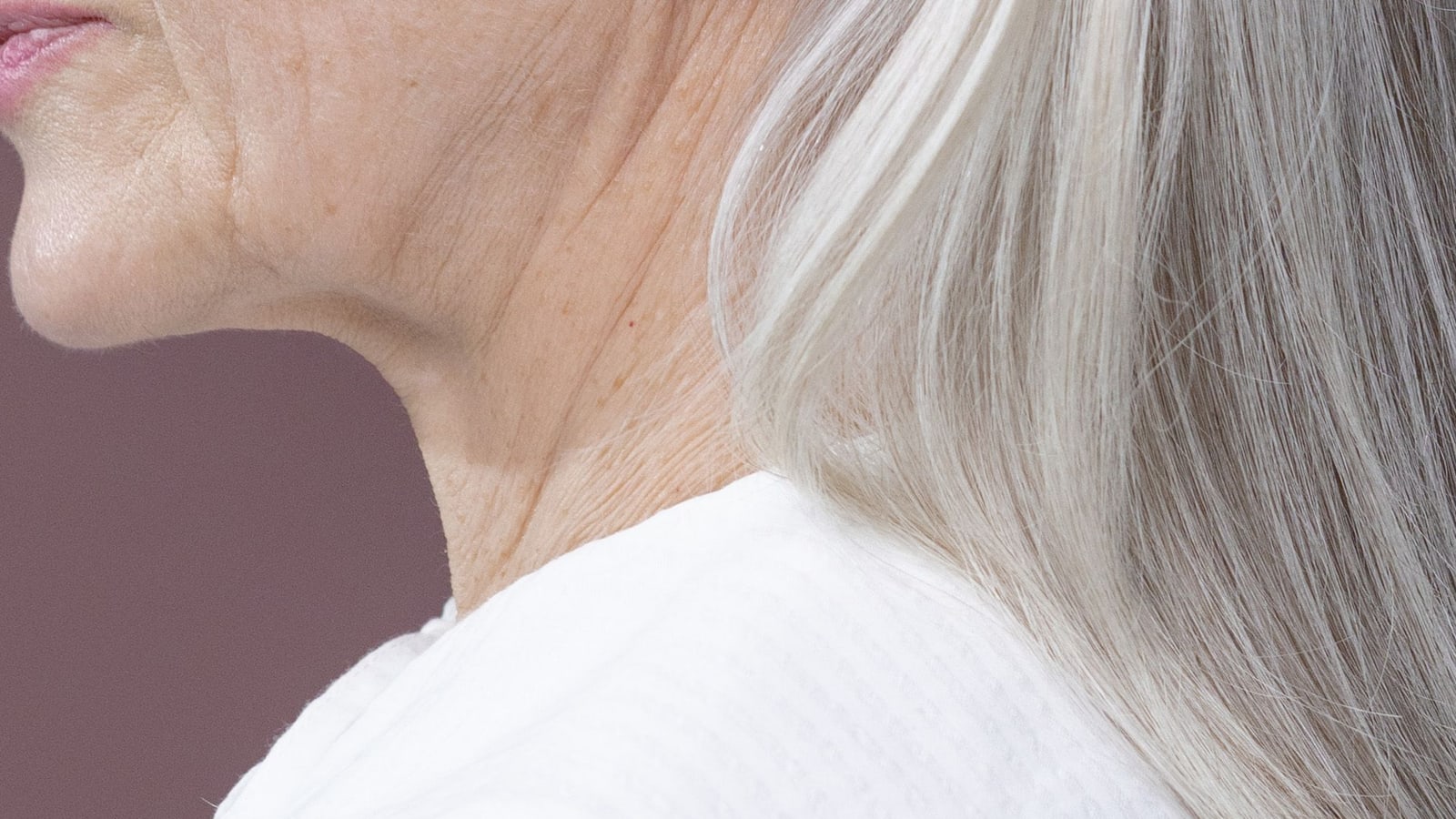
MedlinePlus, the National Library of Medicine's patient encyclopedia, describes two other changes that affect men and women alike: connective tissue changes that reduce the skin's strength and elasticity, most noticeable in sun-exposed areas, and a thinning of the subcutaneous fat layer that leaves less padding under the skin (Aging changes in skin). Less firmness in the skin and less support under it make the face look sagging rather than only lined.
Skin tightening in your 50s: ultrasound, radiofrequency, laser, or a facelift for aging skin?
Mainly by the amount of sagging, which places you in one of the AAD's tiers. The AAD sorts skin tightening options by the size of the result (Many ways to firm sagging skin). Skin-firming creams give subtle tightening at best and cannot lift sagging skin. Non-invasive procedures such as radiofrequency, ultrasound, and non-wounding laser give modest tightening and lifting with little or no downtime. Minimally invasive procedures (radiofrequency through a thin tube or needles, and laser resurfacing) give the most tightening and lifting without surgery but require sedation and days of recovery, and laser resurfacing carries a greater risk of side effects such as scarring. A surgical lift, such as a facelift or eyelid surgery, gives the most dramatic results. The AAD says you are likely to benefit most from skin tightening if you have a small amount of sagging skin, and that if you have lots of sagging skin, skin tightening may not be helpful. That assessment determines which tier of treatment is discussed.
The AAD also lists conditions that make someone a good candidate for non-surgical tightening: being at a healthy weight and maintaining it, eating a healthy diet, not smoking, drinking little alcohol, and protecting the skin from the sun. It says a skin tightening procedure is not right for anyone who is pregnant, has a skin infection, or takes certain medications. Which medications those are is a question to ask at the examination.
Two further factors are for you to decide: how much downtime you can accept, and how large a change you want. A modest, gradual change with no recovery time and a larger change that needs about a week at home (5 to 7 days for laser resurfacing, in the AAD's figures) are different choices, and the AAD's tiers show that difference.
Why does the area matter as much as the tier?
Because at this age the changes often show in more than one place. The AAD's menopause page lists sagging skin, jowls, and lasting lines from the nose to the mouth together, and Cleveland Clinic lists the face, neck, arms, and hands, plus body contouring, among the uses of radiofrequency tightening (Radio Frequency (RF) Skin Tightening: Benefits & Dangers). The tier answers how much change is possible; the area decides how a treatment is carried out.
Some surface radiofrequency devices cover that range by carrying more than one tip. Interchangeable electrode tips are standard electrosurgical equipment (Electrosurgery), and tips differ in how much skin they contact at once: a review of radiofrequency physics notes that tips carrying more electrodes let larger areas be treated at the same time (Physics of fractional microneedle radiofrequency – A review). Where a device offers more than one tip, ask which tip is used for each area: a larger contact area covers more skin per pass, and a smaller one fits a narrow area. The tip does not move the AAD's ceiling for the tier; a large tip on a lot of sagging skin still gives the modest result the AAD describes. The tip changes how each area is treated, not how much.
Facelift or nonsurgical skin tightening with ultrasound and radiofrequency: what the non-surgical options realistically do for older skin laxity
Modest tightening and lifting that appears gradually. That is the AAD's description for the whole non-invasive category, and the AAD does not qualify it by age. For radiofrequency specifically, the AAD says most people have one treatment, feel some tightening right away, and see the fullest result at about 6 months, with results that can last 2 to 3 years with the right skin care.
Cleveland Clinic's patient guidance on radiofrequency tightening gives similar figures: visible change in skin tone and appearance within two to six months, some people needing two to six treatments, and effects that may last one to three years with proper skin care because the skin is always aging (Radio Frequency (RF) Skin Tightening: Benefits & Dangers).
The AAD describes non-invasive tightening as suited to a small amount of sagging, and says it may not be helpful for lots of sagging skin. In your 50s, when jowls or nose-to-mouth lines may already be established, that description sets the limit of what to expect from this tier.
What supports the result alongside a procedure?
The habits that slow collagen loss are also the conditions the AAD lists for good treatment results.
- Sun protection. The AAD's menopause guidance says protecting the skin from the sun can reduce visible wrinkles and prevent new ones, and MedlinePlus notes that most skin changes are related to sun exposure.
- A retinoid or peptide product. The AAD says skin care products containing retinol or peptides can increase collagen in the skin.
- Not smoking. The AAD's guidance on premature aging says smoking greatly speeds up how quickly skin ages (11 ways to reduce premature skin aging).
- A stable weight. Being at a healthy weight and maintaining it is on the AAD's list of conditions for good tightening results.
What does recovery actually involve at this age?
The tiers above give downtime as a number of days; at this age those days are worth reading as a floor, because healing itself is slower. The AAD's guidance on skin after 50 says that when hormone levels fall, skin takes longer to heal, with a greater risk of infection or another skin problem, and that thinner skin bruises more easily; MedlinePlus puts wound healing in aging skin at up to 4 times slower. None of the sources say a person in their 50s needs longer than the published downtime for a given procedure.
What the sources describe, in order:
- The appointment. Most non-invasive procedures take 1 hour or less (AAD); Cleveland Clinic gives about one hour for radiofrequency.
- The same day. You may be able to return to work, and you can wear makeup immediately after the procedure (Cleveland Clinic).
- The first 24 hours. Mild redness and swelling should go away (Cleveland Clinic); the AAD describes temporary redness and swelling as usually the only sign of a non-invasive procedure.
- Past a few days. Call your provider if redness or swelling lasts for several days, or if a skin rash or unexplained skin changes appear (Cleveland Clinic).
- The minimally invasive tier. Sedation, someone to drive you home, a compression garment for 4 or 5 days, and wound care; 5 to 7 days at home for laser resurfacing; results in about 1 month for radiofrequency delivered through a thin tube or needles (AAD).
MedlinePlus adds that moist skin heals more quickly, and the AAD recommends a fragrance-free moisturizer for skin that has become more easily irritated.
This article is general information, not medical advice. Treatment suitability and results vary between individuals and are assessed by a qualified clinician.
Sources
- American Academy of Dermatology. Caring for your skin in menopause. https://www.aad.org/public/everyday-care/skin-care-secrets/anti-aging/skin-care-during-menopause ↗
- MedlinePlus Medical Encyclopedia, National Library of Medicine. Aging changes in skin. Review date 7/15/2024. https://medlineplus.gov/ency/article/004014.htm ↗
- American Academy of Dermatology. Many ways to firm sagging skin. https://www.aad.org/public/cosmetic/younger-looking/firm-sagging-skin ↗
- Cleveland Clinic. Radio Frequency (RF) Skin Tightening: Benefits & Dangers. Last updated 02/04/2023. https://my.clevelandclinic.org/health/treatments/24683-radio-frequency-rf-skin-tightening ↗
- American Academy of Dermatology. 11 ways to reduce premature skin aging. https://www.aad.org/public/everyday-care/skin-care-secrets/anti-aging/reduce-premature-aging-skin ↗
- Baigrie D, Qafiti FN, Buicko Lopez JL. Electrosurgery. StatPearls, NCBI Bookshelf. Last update May 22, 2023. https://www.ncbi.nlm.nih.gov/books/NBK482380/ ↗
- Chandra S, Mysore V, Shah S, Malayanur D, S R S. Physics of fractional microneedle radiofrequency – A review. Journal of Cutaneous and Aesthetic Surgery, 2024. https://pmc.ncbi.nlm.nih.gov/articles/PMC11497551/ ↗
Frequently asked questions
What is the best treatment for improving skin tightening and lifting for someone in their 50's?
For a small amount of sagging, the non-invasive options the American Academy of Dermatology lists are radiofrequency, ultrasound, and non-wounding laser tightening, which give modest, gradual tightening with little or no downtime. For more sagging, minimally invasive procedures give more tightening than the non-invasive ones but require days of recovery, and only surgery gives the most dramatic change. The AAD says tightening may not help lots of sagging skin, so the amount of sagging, assessed by a clinician, decides which category applies rather than a single best treatment.
Why is my skin sagging faster now than in my 40s?
For women, collagen loss accelerates around menopause, which for many falls in this age range. The AAD cites studies showing that women's skin loses about 30% of its collagen in the first five years of menopause and about 2% a year for the next 20 years, and MedlinePlus describes connective tissue changes that reduce elasticity and a thinning fat layer under the skin. Less firmness in the skin and less support beneath it produce sagging, jowls, and lasting nose-to-mouth lines.
Can a cream tighten sagging skin in your 50s?
Only subtly. The AAD says a cream or lotion cannot penetrate deeply enough to lift sagging skin, and that the quick change people notice from such products usually reflects an effective moisturizer plumping the skin temporarily. It does note that a product with a retinoid, such as retinol, can help the body make more collagen, which is a small change rather than a lift.
How many sessions of non-invasive skin tightening are usual?
For radiofrequency, the AAD says most people have one treatment and some benefit from more, while Cleveland Clinic says some people need two to six. For non-wounding laser tightening, the AAD lists 3 to 5 treatments, and for ultrasound it says one treatment produces modest lifting within 2 to 6 months with more benefit possible from additional sessions. Neither source fixes the number; Cleveland Clinic describes another treatment being recommended if the result you wanted has not appeared.
Who should not have a skin tightening procedure?
The AAD says a skin tightening procedure is not right for anyone who is pregnant, has a skin infection, or takes certain medications, and that it may not be helpful for people with lots of sagging skin. Which medications matter, and whether your degree of sagging is one these procedures can help, is determined at the examination.
This content is for general information only and does not guarantee the results of any treatment. Any treatment decision should be made in consultation with a qualified medical professional.