How RF microneedling treatments for acne scars differ

Key Takeaways
- None of the cited sources identifies one RF microneedling treatment as best for acne scars. The AAD lists radiofrequency among acne-scar procedures, while ASAP 2024 discusses microneedle bipolar RF and fractional bipolar RF for ice pick and boxcar scars without comparing devices head to head.
- RF microneedling treatments differ in electrode arrangement, needle insulation, needle depth, and pulse duration, the time the current is applied at each insertion.
- A review of microneedle radiofrequency physics reports that, in the histometric studies it cites, needle depth and pulse duration, but not energy level, were found to significantly affect the extent of heat-induced coagulation.
- Acne scar studies cannot be compared directly because scar type, device settings, and assessment timing differ between studies.
- ASAP 2024 describes three to four radiofrequency sessions with assessment three months after the last treatment, but does not specify one RF delivery type or device for that schedule.
RF microneedling studies use different devices, settings, scar types, and assessment times. A result from one setup therefore cannot be treated as evidence for every RF microneedling treatment.
Comparing RF microneedling treatments for acne scars
None of the sources cited in this article identifies a single RF microneedling treatment as the one that works best for acne scars. The American Academy of Dermatology lists radiofrequency among the procedures used for acne scars and describes radiofrequency microneedling as a type of radiofrequency that combines radiofrequency with microneedling. Microneedling, the AAD adds, is often used together with another treatment, such as radiofrequency, chemical peeling, or platelet-rich plasma. (Acne scars: Consultation and treatment)
A 2024 expert-panel review, Practical Aspects of Acne Scar Management: ASAP 2024, states that microneedle RF is widely used for scar treatment because it allows the depth of tissue heating to be controlled. It reports favorable results for ice pick and boxcar scars treated with microneedle bipolar RF and fractional bipolar RF. Its radiofrequency section describes results after three to four sessions, assessed three months after the last treatment. The review does not specify one RF delivery type or device for that schedule, so the figures should not be read as a standard course for every RF microneedling treatment. (Practical Aspects of Acne Scar Management: ASAP 2024)
Neither source compares RF microneedling devices head to head. The cited evidence therefore cannot identify a single preferred device or configuration.
Ice pick, boxcar, and rolling scars in RF microneedling studies
Before a treatment is chosen, the clinician determines which type of scar is present. The AAD distinguishes the flat, pigmented spots left after a breakout from true scars: those spots usually fade, although fading can take time. (Acne scars: Signs and symptoms)
Depressed (atrophic) acne scars are classified into three types. ASAP 2024 describes each one and how it tends to respond to treatment.
| Scar type | Shape described in the review | Response noted in the review |
|---|---|---|
| Ice pick | Narrow tracts under 2 mm wide, deep, and sharply demarcated, extending vertically toward the deep dermis or subcutaneous tissue in a V shape | Ice pick scars extend deep into the dermis and are therefore, in the review's assessment, difficult to treat with conventional skin resurfacing |
| Boxcar | Oval depressions with sharply demarcated vertical edges, wider at the surface than ice pick scars, in a U shape | Shallower boxcar scars respond better to skin resurfacing than deeper ones, which are more resistant to superficial treatments |
| Rolling | May reach 5 mm or more in diameter, with an undulating M-shaped appearance | Rolling scars are the type for which the review calls subcision effective; it describes deep boxcar and ice pick scars as less treatable |
Study results also depend on which scar types were treated. A study dominated by rolling scars is not directly comparable with one dominated by ice pick scars, even if both report acne-scar improvement.
RF microneedling settings: electrode arrangement, insulation, depth, and pulse duration
RF microneedling treatments differ in features built into the tip and settings selected for the session. The electrode arrangement changes how current travels through tissue, while needle insulation changes which section of the inserted needle acts as the active electrode. Needle depth, power, exposure time, and pass pattern then shape where and over what volume thermal coagulation forms. A narrow, deep scar and a broad rolling depression do not present the same target, so the useful question is whether the available tip and settings match the scar shapes and skin thickness being treated. (Physics of fractional microneedle radiofrequency – A review)
With insulated needles, the uncovered section conducts; with non-insulated needles, the inserted length acts as the active electrode. Insulation changes which section conducts, not how deep the needle reaches.
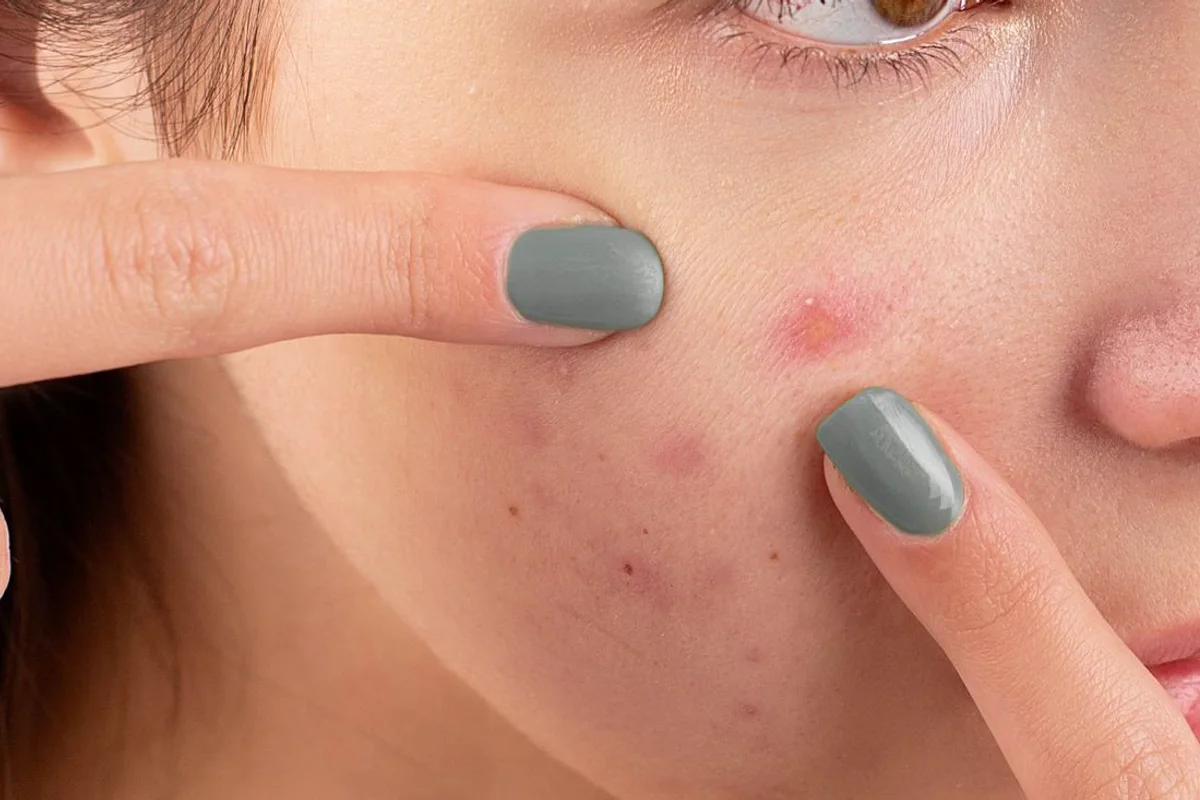
Needle depth is chosen for the skin thickness of the treated area and the condition being treated. The review notes that some machines allow the operator to vary that depth. For deep acne scars or traumatic atrophic scars, the review says depths up to 3.5 mm may be reached.
Pulse duration, also called exposure time, is selected at each session. The physics review states that it affects the volume of thermal coagulation and separately describes power as a setting that affects the intensity of electrothermal damage. These are delivery variables, not outcome scores.
Skin impedance varies between people and body sites and also changes with moisture and temperature. The physics review describes systems that provide real-time impedance or temperature feedback. That feedback can inform how delivery is monitored during a procedure, but it does not establish an effect on burns, pain, or acne-scar outcomes. Settings from one manufacturer's device also cannot be assumed to produce the same tissue effect on another.
Why RF microneedling studies cannot be compared directly
Three things differ between studies and block a direct comparison: scar type and grading scale, device settings, and assessment timing.
Scar type and grading differ between studies. Ice pick, boxcar, and rolling scars respond differently, and studies may use different grading scales, so a grade in one study may not match a grade in another.
Device settings differ too, and because the physics review of fractional microneedle radiofrequency describes parameters as product dependent, a study performed at one device's depth and pulse settings reports on that device at those settings; its outcome is not a property of every RF microneedling treatment.
Assessment timing differs as well. ASAP 2024 reports a broad radiofrequency result assessed three months after the last treatment, but does not tie that figure to one RF delivery type or device. AAD guidance separately says full microneedling results usually take several months. (Microneedling can fade scars, uneven skin tone, and more)
RF microneedling sessions, recovery, and FDA safety risks
AAD guidance gives three to five microneedling treatments every two to four weeks but no separate course for RF microneedling. Temporary redness or darkening, burning, discomfort, or swelling usually resolves within a few days to a week. The page adds that the risk of infection, scarring, or long-lasting skin discoloration rises when the operator lacks medical training and in-depth knowledge of the skin.
The U.S. Food and Drug Administration has issued a safety communication on RF microneedling. Serious complications have been reported with certain uses of these devices, it states, "including burns, scarring, fat loss, disfigurement, and nerve damage." The agency's advice is to seek a licensed health care provider who has training and experience with RF microneedling devices specifically, and it characterizes RF microneedling as "a medical procedure, not a cosmetic treatment" and the devices as unsuitable for home use. (Potential Risks with Certain Uses of Radiofrequency (RF) Microneedling – FDA Safety Communication)
A useful comparison therefore needs the scar types, electrode and needle configuration, treatment settings, number of sessions, and assessment date from each study.
Treatment response and recovery vary between individuals.
Sources
- Acne scars: Consultation and treatment ↗
- Acne scars: Signs and symptoms ↗
- Practical Aspects of Acne Scar Management: ASAP 2024 ↗
- Physics of fractional microneedle radiofrequency – A review ↗
- Microneedling can fade scars, uneven skin tone, and more ↗
- Potential Risks with Certain Uses of Radiofrequency (RF) Microneedling – FDA Safety Communication ↗
- Fractional Radiofrequency Microneedling as a Monotherapy in Acne Scar Management: A Systematic Review of Current Evidence ↗
Frequently asked questions
Out of the RF microneedling treatments, can you check which works best for acne scars?
No source cited here identifies one RF microneedling treatment as the one that works best for acne scars. The American Academy of Dermatology lists radiofrequency among the procedures used for acne scars and describes radiofrequency microneedling as a type of radiofrequency. ASAP 2024 names ice pick and boxcar scars as types treated with microneedle bipolar RF and fractional bipolar RF, but the two sources do not compare devices with each other. Treatments differ in electrode arrangement, needle insulation, needle depth, and exposure time. The studies also differ in scar type, settings, and assessment timing, so a result from one setup does not establish the outcome of a different device or setting.
Which settings change how much tissue RF microneedling heats?
Needle depth and pulse duration are the two settings that a review of microneedle radiofrequency physics reports as significantly affecting the extent of heat-induced coagulation in histometric studies. Energy level was not found to have that effect in the same studies; the review describes it separately as the setting that determines the intensity of the electrothermal damage. Depth is chosen for the thickness of the skin in the treated area, and pulse duration determines the volume of tissue that is coagulated. The review also states that parameters are product dependent and vary from one manufacturer's machine to another.
How many sessions are involved, and when is the result judged?
ASAP 2024 describes three to four radiofrequency sessions, with the result assessed three months after the last session. That section does not specify one RF delivery type or device. For microneedling in general, the AAD gives three to five treatments for acne scars at two-to-four-week intervals, with improvement building over weeks and full results usually taking several months. The AAD page describes radiofrequency microneedling as a type of microneedling but gives no separate schedule for it.
What risks does the FDA's safety communication describe for RF microneedling?
According to the FDA, certain uses of RF microneedling devices have led to reports of burns, scarring, fat loss, disfigurement, and nerve damage. Patients are advised to choose a licensed provider trained and experienced with these devices; the agency treats the procedure as medical rather than cosmetic and says the devices are not for home use.
For RF microneedling acne scars treatment, is there a fractional radiofrequency microneedling systematic review covering acne scars, and what does it conclude?
Yes. A 2025 systematic review of fractional radiofrequency microneedling used as monotherapy for acne scars searched PubMed and EBSCO through July 2024 and included 16 studies with 481 patients: six prospective studies, six randomized clinical trials, three retrospective studies, and one comparative trial. The authors conclude that the treatment "is likely an effective treatment for acne scarring when used as a monotherapy" and that further randomized controlled trials are needed to establish treatment parameters. They could not conduct a meta-analysis because the studies used different scoring systems, and most studies followed patients for one to six months after the last treatment. The review also reports that response varied by scar type, and individual results vary.
For radiofrequency microneedling in acne scars, is there fractional bipolar versus monopolar evidence in a systematic review from 2024?
The 2024 physics review cited here is a narrative review, not a systematic review. Its contribution here is definitional: monopolar RF uses one electrode with a grounding pad, while bipolar RF uses multiple electrodes in the handpiece so current crosses the skin through a closed circuit. The review lists both microneedle-delivered monopolar RF and needle-delivered bipolar RF. It also describes one technique in Asian patients that uses bipolar rotational stamping on individual scars and then monopolar RF across each side of the face. That sequence is not a head-to-head comparison and does not establish that either configuration is more effective.
Do acne scar guidelines cover microneedling with radiofrequency, including a guideline from 2024?
No guideline from 2024 is cited here. Practical Aspects of Acne Scar Management: ASAP 2024 describes itself as a panel summary and states in its abstract that no specific guideline is available to optimize acne scar management. The dermatologists and plastic surgeons met from March through July 2023 for a project named ASAP 2024. For radiofrequency microneedling, the separate 2024 physics review reports a lack of exact treatment parameters and therapeutic guidelines, as well as a lack of standard guidelines and uniform settings in the published literature.
This content is for general information only and does not guarantee the results of any treatment. Any treatment decision should be made in consultation with a qualified medical professional.