Adult acne when topicals stop working: the in-office treatments dermatologists use

Key Takeaways
- Give a topical at least 6 to 8 weeks of consistent use before judging the result, unless a dermatologist has told you to stop sooner.
- The AAD lists laser or light therapy, corticosteroid injection, chemical peel, and acne extraction as office procedures, each for a different clinical situation.
- The 2024 AAD clinical guideline found insufficient evidence to recommend laser and light devices or microneedling for acne. A patient page may still describe an available procedure without the guideline recommending that category.
- RF microneedling uses inserted needles as electrodes. Its tip and settings describe where energy is delivered; they do not by themselves establish that it treats active acne.
- Procedures are not presented as replacements for medication. Moderate-to-severe or hormonal acne may require a different medication plan.
When adult acne does not improve with topical treatment, it is worth checking both the treatment trial and the diagnosis. The type of breakout matters: clogged pores, inflamed lesions, deep painful nodules, and scars do not call for the same office procedure.
Why adult acne may persist despite topical treatment
The first check is whether the topical matched the type of acne and was used consistently for at least 6 to 8 weeks. The AAD advises choosing an active ingredient suited to the breakouts and using it as directed for that period without adding another product. Once a medication works, fewer breakouts may be seen within 4 to 8 weeks, while clearing can take about 16 weeks. (Adult acne treatment dermatologists recommend)
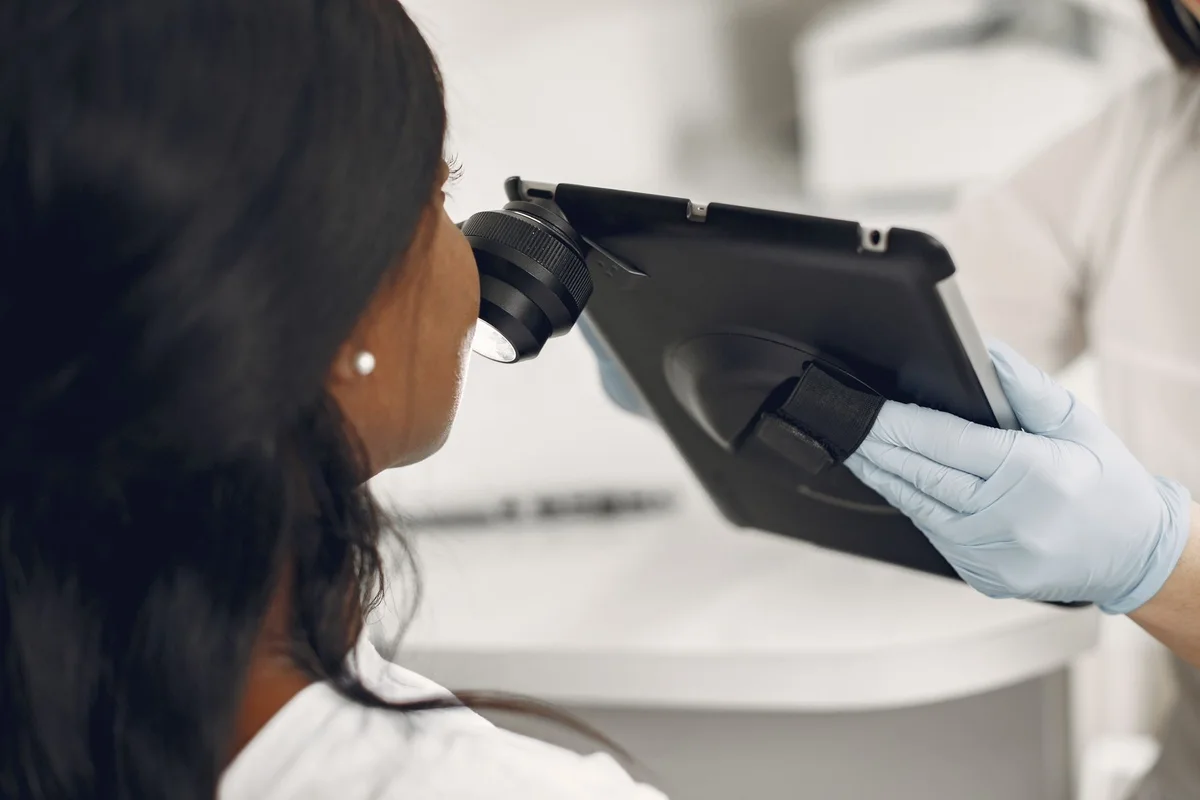
Topicals are less likely to be enough for deep, painful pimples or acne that is leaving scars. Breakouts concentrated on the chin and jawline, especially when they follow a menstrual pattern, can also point to hormonal acne. The AAD lists spironolactone as one medication option for women with persistent hormonal acne. (Adult acne treatment dermatologists recommend)
The diagnosis also needs checking. Hidradenitis suppurativa, perioral dermatitis, and folliculitis can resemble acne but require different management.
In-office options after topical acne treatment
The AAD lists laser or light-based therapy as a possible part of a treatment plan for mild-to-moderate acne. The page does not name a device or session count, and it does not present light treatment as a stand-alone replacement for medication. (Acne: Diagnosis and treatment)
The three other procedures on the AAD's list appear in the same table, with the limits the guidance states for each.
| Procedure | What the AAD's guidance says it does | Limits stated in the guidance |
|---|---|---|
| Laser or light-based therapy | May be part of a treatment plan for mild-to-moderate acne | Described only as part of a plan for mild-to-moderate acne; no device or session count named |
| Corticosteroid injection | Relieves the swelling and pain of a large, painful breakout and can reduce the risk of an acne scar | Used only for a few severe breakouts; using it more than a few times is not recommended |
| Chemical peel | Helps remove excess oil and the dead skin cells that are clogging pores; can help clear acne | No limit stated; described for clogged pores and excess oil |
| Acne surgery (acne extraction) | The dermatologist physically removes acne breakouts | Should be performed only by a board-certified doctor trained in acne surgery, to avoid scarring and infection |
Where RF microneedling fits in an adult acne discussion
The AAD's 2024 clinical guideline found insufficient evidence to recommend procedures including laser and light devices and microneedling for acne. That does not prove that every device procedure is ineffective; it means the evidence did not support a guideline recommendation for those categories.
RF microneedling uses inserted needles as electrodes. Before discussing a tip or setting, separate clogged pores, inflamed lesions, and scars left after acne because each is a different target. Electrode arrangement, needle insulation, depth, power, exposure time, and pass pattern describe where and how energy is delivered. They do not by themselves establish a benefit for active acne. (Physics of fractional microneedle radiofrequency – A review)
Skin impedance varies between people and body sites and changes with moisture and temperature. Some systems monitor impedance or temperature during delivery. That monitoring describes an operating control, not an independently proven improvement in acne outcomes, pain, or complication rates.
Medication and procedures can have different roles
The AAD does not describe any office procedure as a replacement for medication. It presents procedures as additional options that may be included in a plan. The page does not state that medication should stop when a procedure is added.
For moderate-to-severe acne, the guidance says stronger medication may be needed. Laser or light-based therapy appears only as part of a plan for mild-to-moderate acne.
For hormonal acne in women, spironolactone appears on the medication list rather than the procedure list. This is why a long history of adult acne should not be reduced to choosing a device.
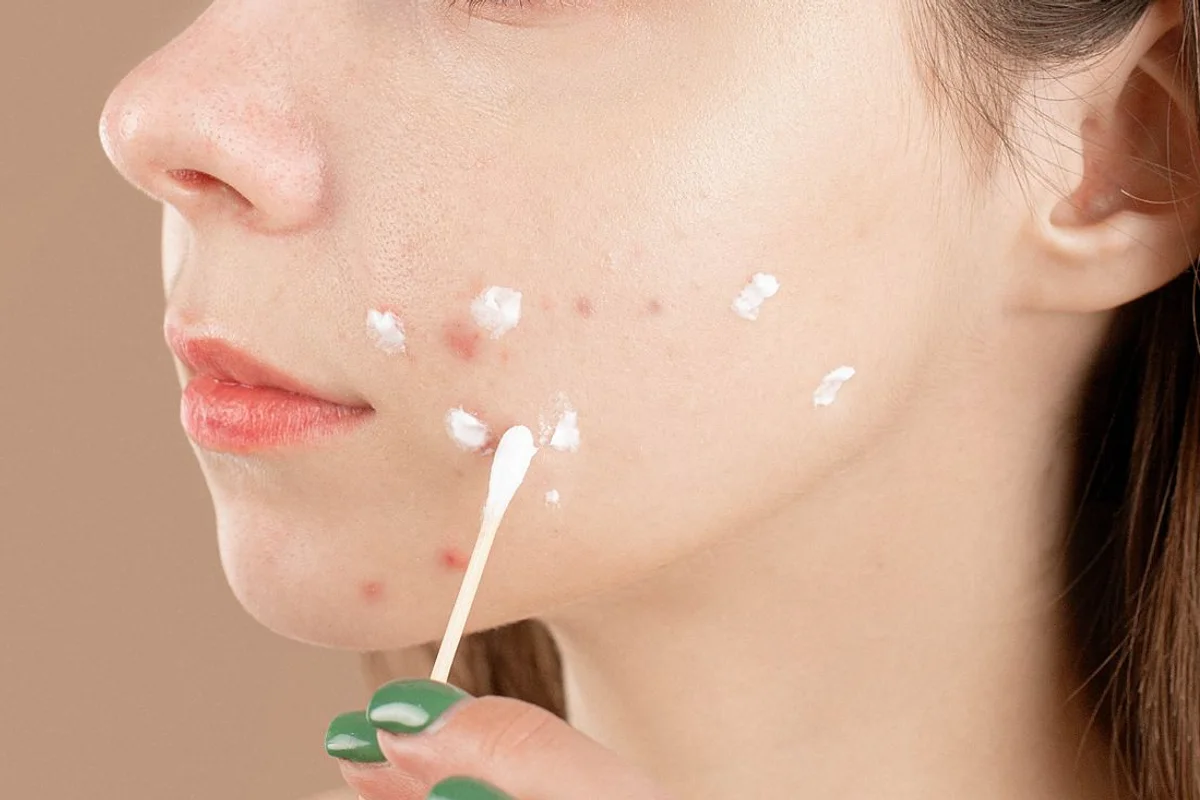
What to review before an adult acne procedure
Record the active ingredient, number of weeks used, and whether use was continuous for each product. Also note where the breakouts occur, whether they are clogged pores, inflamed bumps, or deep painful lesions, and whether they leave pigment changes or scars.
Before a procedure, review recent peels, laser or light treatments, extractions, medications, past keloids, and long-lasting pigment changes. If RF microneedling is proposed, ask which acne-related target is being treated, which tip and settings are intended for it, and what evidence supports that use.
Treatment response and recovery vary between individuals.
Sources
- Adult acne treatment dermatologists recommend ↗
- Acne: Diagnosis and treatment ↗
- Lasers and lights: How well do they treat acne? ↗
- American Academy of Dermatology issues updated guidelines for the management of acne ↗
- Acne clinical guideline ↗
- Guidelines of care for the management of acne vulgaris. ↗
- Physics of fractional microneedle radiofrequency – A review ↗
Frequently asked questions
I've had adult acne for years. Can you look up which in-office device treatments dermatologists use when topicals stop working?
Laser or light-based therapy is the one procedure on the American Academy of Dermatology's list of acne procedures that uses a light-emitting device, and the guidance says it "may be part of a treatment plan for mild-to-moderate acne." The other three procedures on the same list are a corticosteroid injection for a large, painful breakout, a chemical peel for clogged pores and excess oil, and acne extraction, in which the dermatologist physically removes breakouts. For moderate-to-severe acne the guidance says stronger medication may be needed and lists oral medications; office procedures appear under a separate heading as extra help a dermatologist may include in the plan. Which of these is appropriate after years of adult acne depends on the types of acne present, and the dermatologist identifies those by examining the skin.
How many weeks should I give a topical before deciding it has failed?
At least 6 to 8 weeks, used exactly as directed and without adding another product or stopping the one you are testing during that time. That is the AAD's instruction for a non-prescription product, and its guidance on dermatologist-led treatment gives the same minimum before breakouts start to decrease. Once a medication works, the dermatologist quoted on the AAD's adult acne page says you can expect fewer breakouts within 4 to 8 weeks. Clearing is listed later on that quoted timeline, at 16 weeks after starting the medication. If you have not seen the desired results after those 6 to 8 weeks of use, the same dermatologist says it is time to see your dermatologist.
Does the AAD describe acne laser light therapy as something a dermatologist may include in a plan so a patient can stop acne medication?
The AAD's page does not describe it that way. Laser or light-based therapy "may be part of a treatment plan for mild-to-moderate acne," and the page lists every office procedure under the heading "Sometimes acne treatment needs extra help," as something a dermatologist may include in a patient's plan to help get results as good as possible. The page does not say whether medication continues once a procedure is added. The dermatologist who examines your skin decides whether a light treatment is part of your plan and which medications you continue to use alongside it.
My acne is mostly on my chin and jawline. Does that change the treatment?
It can. Stubborn breakouts on the chin and jawline are one of the AAD's two signs of hormonal acne; the other is breakouts that predictably appear during a menstrual period. For women with stubborn hormonal acne, the guidance describes spironolactone as a medication that can treat acne on the face, chest, and back. It is listed as an option when other treatments fail to clear acne. The AAD page attaches safety requirements to spironolactone, and the dermatologist who prescribes it explains them.
Could years of breakouts be something other than acne?
Yes. The AAD names three conditions that get mistaken for acne. Hidradenitis suppurativa, also called acne inversa, is one, and the guidance says its treatment differs from acne treatment. Perioral dermatitis, which causes acne-like breakouts around the mouth or T-zone, is another, and folliculitis, a skin infection, is the third. Because these conditions resemble acne, the dermatologist confirms the diagnosis by examining the breakouts before any treatment is planned.
Does the American Academy of Dermatology describe acne procedures such as lasers, light, chemical peels, and photodynamic therapy in its acne guidelines?
The American Academy of Dermatology describes those procedures on patient pages, not as recommendations in its clinical guideline. Its diagnosis and treatment page lists chemical peels and laser or light treatments as procedures a dermatologist may include in an acne treatment plan, and the linked lasers-and-lights page describes photodynamic therapy (PDT). During PDT, a light-sensitizing solution remains on acne-prone skin for 15 minutes to 3 hours before a dermatologist uses a laser or light device; the page says patients must avoid sunlight for 48 hours afterward. The page also says that laser and light treatments rarely clear acne on their own, that most people need a series of laser or light treatments, and that results vary from person to person.
What does the AAD acne clinical guideline from 2024 say about laser and light devices for acne?
The AAD's January 31, 2024 news release says the available evidence was insufficient to develop recommendations for procedures including chemical peels, laser and light-based devices, and microneedling. The clinical guideline page separately states that the guidelines recommend against adding pneumatic broadband light to adapalene 0.3% gel. The guideline abstract says the work group conducted a systematic review using the GRADE approach and produced 18 evidence-based recommendations and 5 good practice statements. A separate AAD patient page says laser or light therapy may be part of a plan for mild-to-moderate acne; that describes an available option, while the clinical guideline reports what the evidence could and could not support.
This content is for general information only and does not guarantee the results of any treatment. Any treatment decision should be made in consultation with a qualified medical professional.