Do acne scars fade on their own? Marks that fade, scars that stay, and the treatments used

Key Takeaways
- Flat red or brown spots left after acne are usually not scars, and they tend to fade over time.
- A true scar is a change in skin texture, such as a depression. It generally persists, although it may become less noticeable over time or with treatment.
- Atrophic (depressed) acne scars involve an overall reduction in collagen, and the cited dermatology sources do not describe that collagen being regenerated on its own.
- Dermatologists treat remaining scars with surface treatments (chemical peels, microdermabrasion), injections (fillers, platelet-rich plasma), energy devices (lasers, radiofrequency), microneedling, topical medication, and scar surgery, and may combine more than one of them.
- Most of the in-office treatments described by the cited sources take several sessions, and the two sources that give a timescale place full results months after treatment.
Whether a post-acne mark fades depends on what changed. A flat red or brown mark usually fades. A dent changes the skin's texture and generally persists, although it may become less noticeable over time or with treatment. The sources below describe improvement after treatment, not complete removal.
Post-inflammatory marks that fade and acne scars that persist
Flat marks usually fade on their own. A scar that has changed the skin's texture generally persists, although it may become less noticeable over time or with treatment.
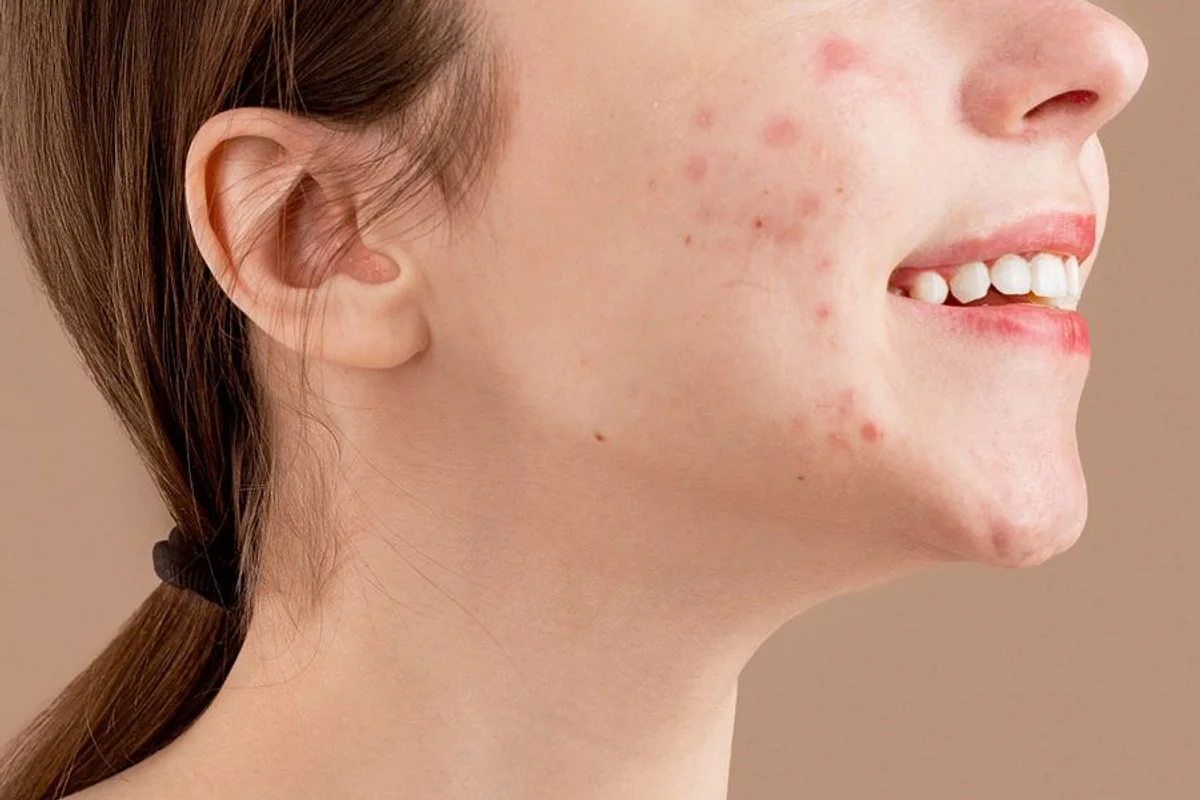
After a pimple clears, a flat, pigmented spot often remains where the lesion was. Those flat spots are usually not scars. A common example is post-inflammatory hyperpigmentation, which usually fades with no trace, although fading can take time. (Acne scars: Signs and symptoms)
A dermatology paper uses post-inflammatory erythema for residual redness and post-inflammatory hyperpigmentation for a pigment change. Both tend to resolve over time. (Easy as PIE (Postinflammatory Erythema))
A color change and a textural scar can occur in the same area. A flat mark differs in color; a scar is depressed below or raised above the surrounding skin.
Types of depressed acne scars and why they persist
A flat mark changes color while the surface stays level. An atrophic scar changes the contour, so fading pigment does not make the depression level with the surrounding skin.
The expert-panel review Practical Aspects of Acne Scar Management: ASAP 2024 distinguishes atrophic scars, which involve an overall reduction in collagen, from hypertrophic scars, which involve a buildup. It describes delayed or prolonged inflammation and collagen degradation as part of the process that leaves atrophic scars. (Practical Aspects of Acne Scar Management: ASAP 2024) A depressed scar therefore reflects a structural change rather than pigment alone.
ASAP 2024 classifies depressed scars into three shapes.
| Scar type | Width | Shape |
|---|---|---|
| Ice pick | Narrower than 2 mm | Deep, sharply demarcated tract extending vertically to the deep dermis or subcutaneous tissue, V-shaped in cross-section |
| Boxcar | Wider than an ice pick scar at the surface | An oval pit with sharply demarcated, vertical sides and a base that stays flat instead of narrowing to a point; U-shaped in cross-section |
| Rolling | May reach 5 mm or more in diameter | Rolling or undulating surface, M-shaped in cross-section |
There are also raised scars (hypertrophic scars, keloids, and papular scars), which dermatologists treat differently. Hypertrophic scars involve a buildup of collagen rather than a loss. The rest of this article is mainly about depressed scars.
RF microneedling and other treatments for persistent acne scars
If you still have active acne, a dermatologist's plan will likely begin with treating the acne, because stopping breakouts can reduce inflammation and prevent new scars from forming. (Acne scars: Consultation and treatment) ASAP 2024 adds that treating scars while lesions are still active can leave already treated areas vulnerable to new scars.
For scars that do not fade on their own after active acne has been treated, the treatments listed by the American Academy of Dermatology are medication applied to the skin, chemical peels, microdermabrasion, microneedling, radiofrequency, laser treatment, fillers, platelet-rich plasma, and scar surgery. A dermatologist may combine more than one of them.
Peels and microdermabrasion act at the surface, fillers are placed beneath a depression, and lasers or radiofrequency deliver energy into the skin. Microneedling stimulates collagen production, while subcision releases fibrous tissue beneath a rolling scar. The choice depends on the scar shape and treatment target.
In RF microneedling, the inserted needles act as electrodes. A narrow ice pick scar, a wider boxcar scar, and a rolling depression are different targets, so the relevant variables are the needle arrangement, active electrode section, depth, power, and exposure time used for each area. These variables describe where energy is delivered; they do not predict the result by themselves. (Physics of fractional microneedle radiofrequency – A review)
When acne scar results appear and what recovery can involve
Microneedling works by stimulating the body to make collagen. Results appear gradually as that collagen is produced. Some improvement may be visible within a few weeks, but full results usually take several months. (Microneedling can fade scars, uneven skin tone, and more)

AAD guidance describes three to five microneedling treatments for acne scars at intervals of two to four weeks. Improvement builds as collagen is produced, and full results usually take several months. ASAP 2024 separately describes three to four radiofrequency sessions with assessment three months after the last session, but its radiofrequency section does not specify one delivery type or device. That figure is not a standard RF microneedling schedule.
Microneedling can cause temporary redness or darkening, burning, discomfort, or swelling. The AAD says these reactions usually resolve within a few days to a week. A treatment plan should separate this short recovery period from the later date used to assess scar improvement.
Treatment response and recovery vary between individuals.
Sources
- Acne scars: Signs and symptoms ↗
- Easy as PIE (Postinflammatory Erythema) ↗
- Practical Aspects of Acne Scar Management: ASAP 2024 ↗
- Acne scars: Consultation and treatment ↗
- Microneedling can fade scars, uneven skin tone, and more ↗
- Physics of fractional microneedle radiofrequency – A review ↗
- Acne scarring ↗
Frequently asked questions
Can you find out whether acne scars fade on their own and what medical treatments can effectively improve them?
Flat red or brown marks left after acne usually fade on their own, although fading can take time. Textural scars such as depressions generally persist, although they may become less noticeable over time or with treatment. For scars that remain after active acne has been treated, the American Academy of Dermatology lists options including chemical peels, fillers, lasers, microneedling, radiofrequency, and scar surgery. The sources describe improvement rather than complete removal and do not identify one treatment as best for every scar.
Is post-inflammatory hyperpigmentation a scar?
No. Post-inflammatory hyperpigmentation is a flat spot where pigment has increased after a breakout, and such spots are usually not scars. Unlike scars, they usually fade with no trace, although fading can take time. Residual redness after acne, called post-inflammatory erythema, also tends to resolve over time. A scar differs from both because the texture of the skin itself has changed.
Why do depressed acne scars persist instead of becoming level with the surrounding skin?
Depressed acne scars involve an overall reduction in collagen. Practical Aspects of Acne Scar Management: ASAP 2024 describes delayed or prolonged inflammation and collagen degradation as part of the process that leaves atrophic scars. A pigment change can fade while the structural depression remains.
How many sessions does acne scar treatment usually take?
For microneedling on acne scars, AAD patient guidance describes three to five treatments spaced two to four weeks apart, with full results usually taking several months. ASAP 2024 separately describes three to four radiofrequency sessions with assessment three months after the last session, but does not specify one RF delivery type or device. Temporary redness or swelling after microneedling usually resolves within a few days to a week and should not be confused with the later treatment result.
According to the American Academy of Dermatology acne scars treatment page, are atrophic scars, hypertrophic scars, and post inflammatory hyperpigmentation treated differently?
Yes. The American Academy of Dermatology separates depressed acne scars, its term for the atrophic type discussed in the 2024 review, from raised scars, which develop when the body produces too much collagen and require different treatment. For hypertrophic scars, the AAD page lists laser treatments, injections, or prescription medication applied to the scar. For keloids, it lists injections, laser therapy, surgery, or freezing and notes that some keloids return after treatment. Post-inflammatory hyperpigmentation is different again: the AAD signs page describes it as a flat spot that is usually not a scar and usually fades, although fading can take time.
On the DermNet acne scarring treatment page, do atrophic scars and post inflammatory hyperpigmentation improve on their own, and how long can that take?
Color changes often improve on their own, but acne scars usually remain. DermNet's acne scarring page, last reviewed in August 2023, says color changes associated with acne often improve over months or longer; it also says acne scars usually remain, although they may become less noticeable spontaneously or with treatment. The page states that most acne scars are atrophic and that post-inflammatory hyperpigmentation occurs when melanin is deposited in skin with recent inflammatory damage. The AAD likewise says these flat pigment spots usually fade without leaving a trace, although fading can take time, and the course varies between individuals.
Which acne scars treatment review covers microneedling, laser, subcision, and TCA CROSS together, and is it a systematic review?
Practical Aspects of Acne Scar Management: ASAP 2024 covers all four, but it is an expert-panel review rather than a systematic review. Its treatment table lists CROSS for ice pick scars and narrow boxcar scars, lasers and microneedling among treatments for atrophic scar types, and subcision for rolling scars. The review describes TCA CROSS as applying a high concentration of trichloroacetic acid locally and repeatedly to scars, with sessions repeated three to four times at one-month intervals. It ties the choice of technique to the scar types present in each patient.
This content is for general information only and does not guarantee the results of any treatment. Any treatment decision should be made in consultation with a qualified medical professional.