Red acne marks with depressed scars: what gets treated first

Key Takeaways
- Active acne is treated before any scar procedure, because new breakouts keep producing new scars in skin that has already been treated.
- Flat red or brown discoloration usually fades on its own. A depressed scar does not fade on its own.
- Depressed scars are grouped by shape. Practical Aspects of Acne Scar Management: ASAP 2024 links different procedures to rolling, boxcar, and ice pick scars.
- Within RF microneedling, the tip and settings need to match the width, depth, and skin thickness of the scar being treated.
Red or brown marks are flat changes in color; depressed scars change the skin's contour. Dermatologists first control active acne, then match scar procedures to the shape of each depression while flat marks are managed separately.
Treatment order for active acne, red marks, and depressed scars
Active acne is treated first. Once breakouts stop, depressed scars are treated according to their shape and depth. Flat red or brown marks usually fade over time and are assessed separately from scars that change the skin's contour.
The American Academy of Dermatology says that when breakouts are still occurring, a treatment plan will likely begin with acne treatment. Stopping breakouts can reduce inflammation and prevent new scars from forming. (Acne scars: Consultation and treatment)
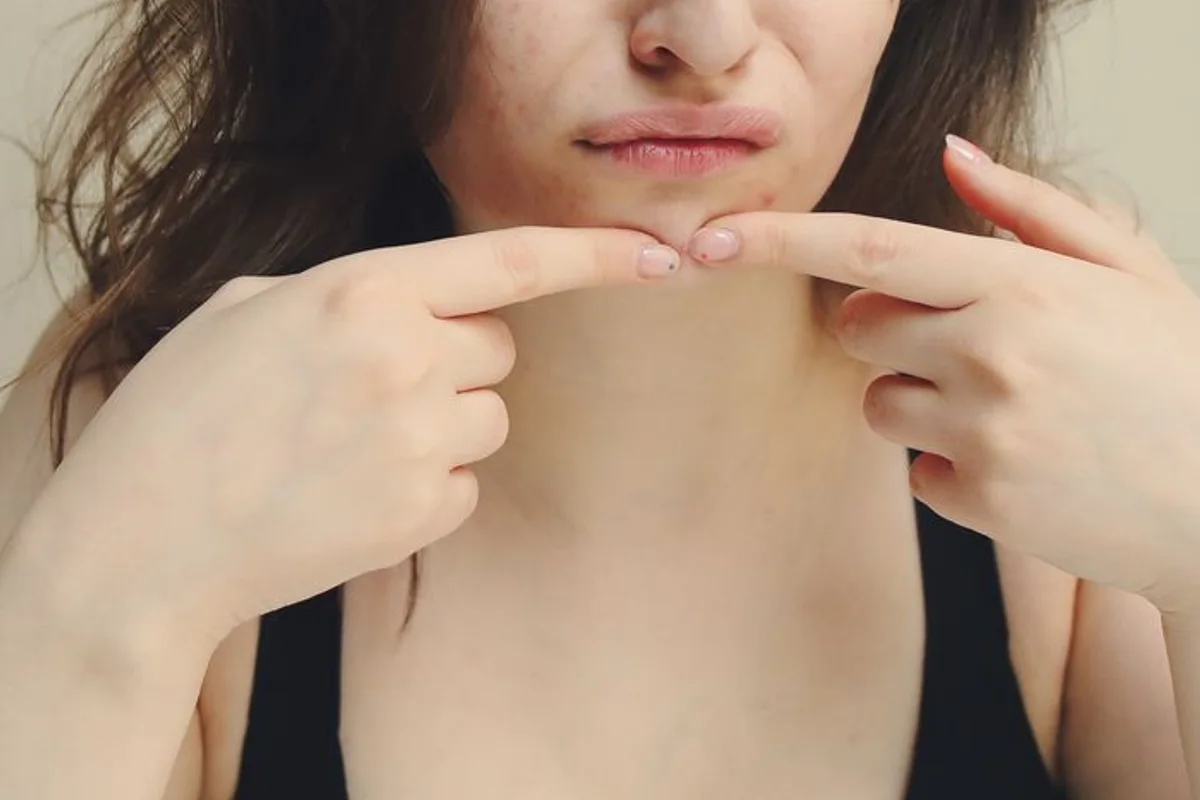
A review titled Practical Aspects of Acne Scar Management: ASAP 2024 explains why active acne is treated first: unless it is controlled before scar treatment begins, new lesions keep scarring areas that have already been treated. (Practical Aspects of Acne Scar Management: ASAP 2024)
Once breakouts are controlled, flat discoloration is separated from depressed scars before a procedure is selected.
A flat, discolored spot where a pimple used to be is usually not a scar. According to the AAD's patient page on acne scar symptoms, these flat spots, unlike scars, usually fade and leave no trace, although fading can take time. (Acne scars: Signs and symptoms)
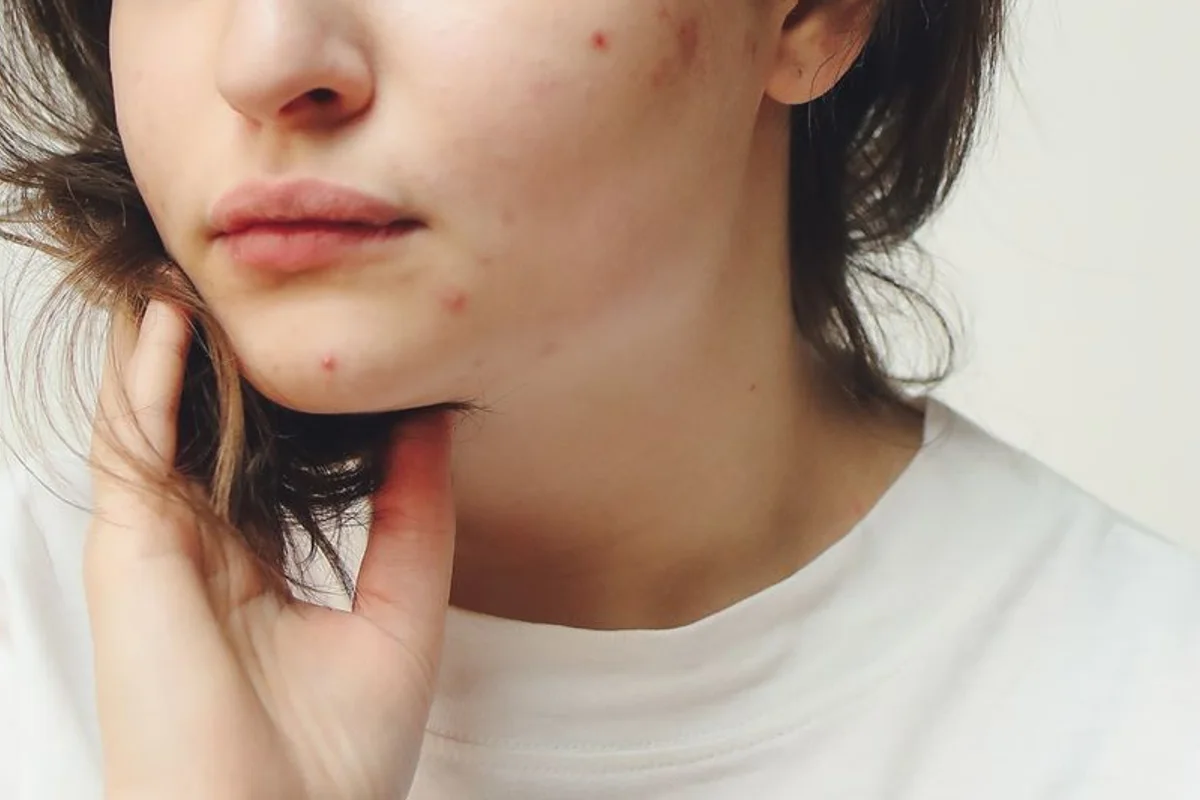
A dermatology paper uses postinflammatory erythema for residual redness and postinflammatory hyperpigmentation for a pigment change. Both tend to fade over time, while a scar changes the skin's contour and persists. (Easy as PIE (Postinflammatory Erythema))
The postinflammatory erythema paper describes individual cases rather than a formal study. This article cites it only for the terminology and for how red and brown marks change over time without treatment, not as evidence that any procedure works for red marks.
Depressed scars change the skin's contour and may cast a shadow under side lighting. A flat mark differs from the surrounding skin only in color.
How scar shape guides procedures and RF microneedling settings
The ASAP 2024 review groups depressed scars into three shapes.
| Scar shape | Size | Appearance in cross-section |
|---|---|---|
| Ice pick | Narrower than 2 mm | Deep, narrow tract with sharply demarcated walls that runs straight down toward the deep dermis or the subcutaneous tissue, forming a V |
| Boxcar | Broader at the skin surface than an ice pick scar | Oval-shaped depression whose vertical edges are sharply demarcated; the base is flat rather than tapering to a point, giving a U profile |
| Rolling | May reach 5 mm or more across | Rolling or undulating appearance, forming an M |
The review pairs subcision mainly with rolling scars because it releases fibrotic tissue beneath the depression. It links punch techniques to sharply defined boxcar or ice pick scars and non-ablative fractional lasers to rolling and boxcar scars. This is why the same procedure is not used for every depressed scar.
The American Academy of Dermatology's list of treatments for acne scars includes chemical peels and microdermabrasion, fillers and platelet-rich plasma, laser treatment and radiofrequency, microneedling, medication applied to the skin, and scar surgery. To get better results, the AAD says, a dermatologist may use more than one of them.
The cited sources do not name a commercial device or model for this treatment choice. They link the procedure to the scar's shape and depth.
For RF microneedling, scar shape and depth determine which tip and settings are considered. A narrow ice pick scar and a broad rolling depression do not present the same target. Electrode arrangement changes how current travels, insulation changes which section of the inserted needle is active, and depth and exposure time help define where thermal coagulation forms. These features describe how energy is delivered; no single feature establishes the scar outcome. (Physics of fractional microneedle radiofrequency – A review)
Recovery after microneedling for depressed acne scars
Microneedling can leave temporary redness or darkening, burning, discomfort, or swelling; the AAD says these reactions usually clear within a few days to a week. Improvement develops over weeks, with full results usually taking several months. The same page warns that inadequate medical training raises the risk of infection, scarring, and long-lasting discoloration.
Treatment response and recovery vary between individuals.
Sources
Frequently asked questions
I've got red acne marks and depressed scars together. Can you look into which devices to use and in what order?
Active acne is treated first. Flat red or brown marks are then separated from depressed scars because color changes usually fade over time, while a depression requires a scar-specific approach. Rolling, boxcar, and ice pick scars have different shapes and depths, so the procedure and order are matched to the scars present.
Will red acne marks fade without treatment?
Flat red or brown spots that remain after a pimple are usually not scars, and the AAD notes that they usually fade without leaving a trace, although fading can take time. According to a dermatology paper on postinflammatory erythema, red and brown marks both tend to resolve over time. A flat discoloration stays level with the surrounding skin; a depressed scar changes the contour.
How are depressed acne scars classified?
Depressed acne scars are grouped as ice pick, boxcar, or rolling. A 2024 review of the practical aspects of acne scar management describes ice pick scars as narrow tracts, under 2 mm wide, that extend deep and are V-shaped in cross-section. Boxcar scars are oval depressions with sharp vertical edges, U-shaped in cross-section, and rolling scars have an undulating M-shaped profile and may reach 5 mm or more across. The review states that subcision is effective for rolling scars and less so for boxcar and ice pick scars, which are deeper.
How many sessions do scar procedures usually take?
Several of the procedures on the AAD's acne scar list take more than one visit. Mild and medium chemical peels often need repeat sessions, most fillers require a series of treatments, and the AAD's microneedling page gives a typical series of several sessions spaced a few weeks apart. A 2024 review of the practical aspects of acne scar management (ASAP 2024) reports that non-ablative lasers need several sessions before significant results are observed, whereas it describes one treatment session as sufficient for a traditional ablative laser. In its radiofrequency section, the same review reports results observed after three to four sessions and three months after the last one.
Is there an acne scar treatment consensus or guideline covering microneedling, fractional laser, subcision, and erythema?
No consensus or guideline covering all of those procedures is cited here. The 2024 review states in its abstract that no specific guideline is available to optimize acne scar management despite the number of treatment options. It describes itself as a summary of discussions and a practical approach developed by a panel of dermatologists and plastic surgeons, not as a consensus statement or clinical guideline. The review has separate sections for subcision, needling and microneedling, and fractional lasers, and its practical sequence addresses scar-associated erythema before atrophic scarring; the AAD patient page adds that scar treatment typically starts after active acne is under control.
In acne scar treatment, how do depressed atrophic scars differ from post inflammatory erythema before laser or microneedling, and is there a guideline?
Depressed or atrophic scars change the skin's contour, while post-inflammatory erythema changes its color. The AAD says a depressed scar forms when the skin makes too little collagen to fill the area where the acne was. The paper that proposed the term postinflammatory erythema describes residual redness that tends to resolve over time, unlike a true scar that persists. The 2024 review groups atrophic scars as rolling, boxcar, and ice pick scars, places scar-associated erythema before atrophic-scar procedures in its sequence, and says no specific guideline is available.
For acne erythema, does the review discuss pulsed dye laser as a vascular laser for post inflammatory erythema before acne scars are treated?
Within the sequence described by the 2024 review, scar-associated erythema is addressed before atrophic acne scars. For that redness, the review names pulsed dye laser and says it reduces dermal vascular components through selective thermolysis; it does not use the broader phrase vascular laser. Scar-associated erythema is the review's own label and should not automatically be treated as identical to post-inflammatory erythema, which the AAD and the 2013 terminology paper describe as a flat red mark that is usually not a scar.
This content is for general information only and does not guarantee the results of any treatment. Any treatment decision should be made in consultation with a qualified medical professional.