Why enlarged pores don't shrink back, and which skin layer in-office treatments reach

Key Takeaways
- A visible pore is the opening of a pilosebaceous unit, a hair follicle with its oil gland, according to a 2016 review in Cutis.
- The 2016 Cutis review names hair follicle size, oil production and the loss of skin elasticity and tension as the factors most relevant to enlarged pores. It also lists genetics, acne and long-term sun damage among other contributing factors.
- According to the 2016 Cutis review, aging and chronic sun damage disturb the collagen and elastin framework of the skin, and aged, sun-damaged skin has lower levels of a component needed to assemble elastic fibers in the dermis and around pores.
- Clogging, an oily complexion and irritation can make pores look larger, and so can skin that sags with age.
- Studies of pore treatments measure pore size in different ways, according to the 2016 Cutis review.
- RF microneedling acts mostly on the dermis, according to a 2024 review of microneedle radiofrequency physics.
How large a pore looks depends on how much oil the skin makes, on what is plugging the opening and on the elastic support in the dermis, the layer under the skin's surface.
On its page about large pores, the American Academy of Dermatology (AAD) advises on making them less noticeable and does not describe an in-office treatment that closes pores or shrinks them back to an earlier size. RF microneedling, an in-office treatment, acts mostly on the dermis, the layer that contains the skin's elastic fibers, according to a 2024 review of microneedle radiofrequency physics. A 2016 review in Cutis calls enlarged pores difficult to treat, in part because their causes are not fully understood.
Enlarged pores as openings of hair follicles and their oil glands
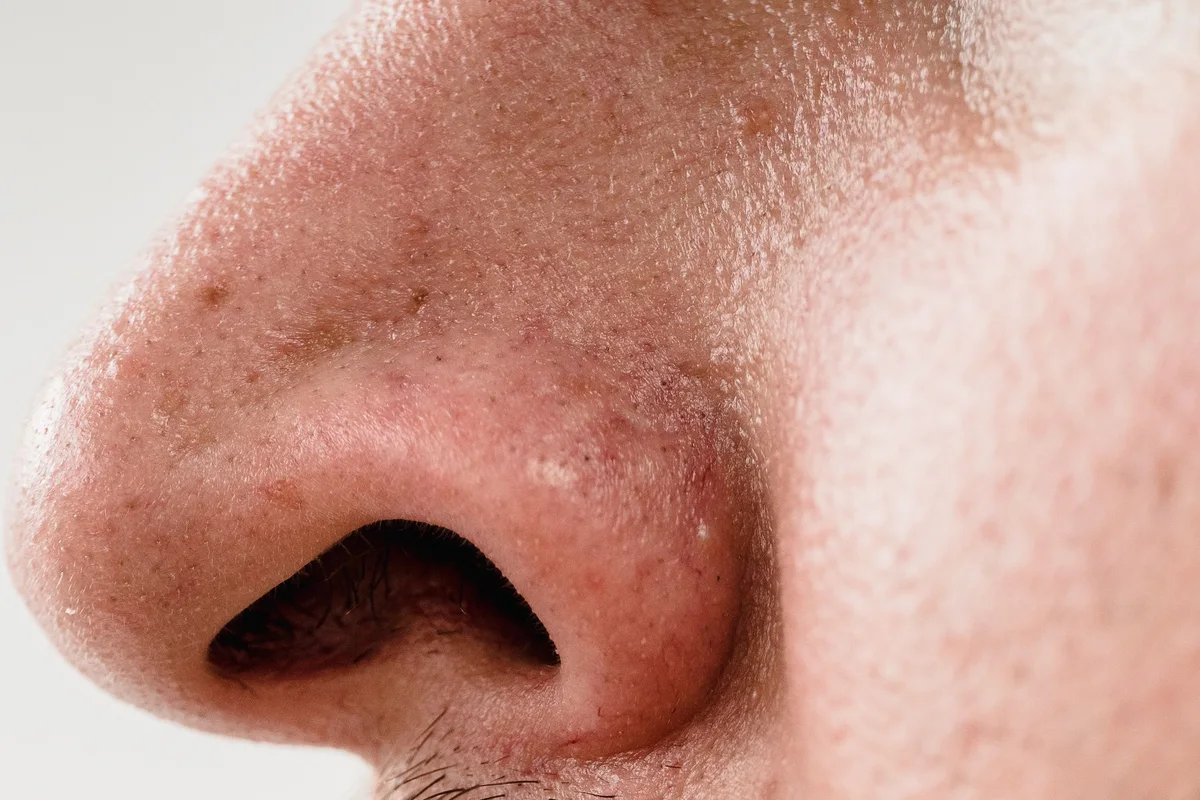
A 2016 review in Cutis describes enlarged facial pores as the visible openings of the pilosebaceous unit, a hair follicle with its attached oil gland, and notes that "pores" is a lay term that is poorly defined in the medical literature.
The review describes these pores as superficial skin structures seen as small openings, which can be plugged with oily debris that appears as open comedones, or blackheads. (Enlarged Facial Pores: An Update on Treatments)
A 2015 study of facial skin pores in Clinical, Cosmetic and Investigational Dermatology notes that the skin also has openings from hair follicles and from sweat glands that are too small to see unaided. The pores people notice measure roughly 250 to 500 µm across and give the cheek a slightly dimpled, golf-ball-like surface, according to the study. (Facial skin pores: a multiethnic study)
Reasons enlarged pores don't go back to their earlier size
A 2016 review in Cutis names hair follicle size and loss of skin elasticity among the factors most relevant to enlarged pores, and reports that aging and chronic sun damage disturb the collagen and elastin framework that keeps skin resilient.
The Cutis review reports that skin elasticity and tensile strength are negatively correlated with pore size and density. According to the review, aged and sun-damaged skin also shows reduced levels of microfibril-associated glycoprotein-1, a component needed to assemble elastic fibers in the dermis and around pores.
The more sun-damaged the skin, the less firm it is. Loss of firmness and sagging with age can make pores look larger. (What can treat large facial pores?)
The authors of the 2015 study describe confocal microscopy showing structural changes in the dermal papillae and in the dermal fiber structure underneath visible pores. Measurements of the cheeks of 2,585 women in that study showed that pore size and density vary between individuals and differ widely between ethnic groups. In their measurements, pore size varied much more with ethnicity than with age. Pore size increased with age in some groups and stayed roughly the same from about age 40 in others. The authors also point out that oil production declines after age 40 while pore size stays broadly constant, which is one reason they do not consider excess oil the main cause of enlarged pores.
Oil, clogging and irritation: changeable causes of larger-looking pores
Clogged pores, an oily complexion and irritation can make pores look larger or more noticeable, and dermatologists recommend cleansing twice daily, which can unclog pores and reduce oiliness.
The same large-pore page explains that when pores clog, they expand and can look more noticeable, and that an oily complexion can make pores look larger. Scrubbing, picking or squeezing can irritate the skin, which can also make pores more noticeable. Non-comedogenic products, which do not clog pores, and gentle cleansing help keep pores clear.
The authors of the 2015 study note that shine from oil can make pores look more visible and larger to the naked eye.

The skin layer RF microneedling reaches
RF microneedling acts mostly on the dermis, the layer under the skin's surface, according to a 2024 physics review, which describes the needles as electrodes for the radiofrequency energy.
The physics review explains that the needles do not heat the epidermis as they pass through it, so the energy bypasses the surface and reaches the dermis and the layer under it. (Physics of fractional microneedle radiofrequency – A review)
The AAD's microneedling guidance describes radiofrequency microneedling as microneedling with added heat that travels down the needles. For microneedling in general, it says that redness or darker shades of the treated skin, a sunburn-like feeling and swelling usually go away within a few days to a week. It also lists infection among the possible side effects of microneedling. (Microneedling can fade scars, uneven skin tone, and more)
The meaning of "tightening" pores in studies
A 2016 review in Cutis describes pore treatments as aiming to reduce oil production, rejuvenate the skin, remove hair or reduce follicle size, and notes that there is no uniform, objective method for reporting pore size.
The review states that evidence-based studies are limited and that many therapies have not been studied with pores as the primary outcome. Needle-only microneedling and laser resurfacing for enlarged pores are described in In-office treatments for enlarged pores: what each approach involves. Studies rely on patient self-reports, physician observation or software that analyzes skin images. Because studies use different methods, results from one method cannot be compared directly with results from another.
Sources
Frequently asked questions
My pores have gotten too big and don't seem to go back to normal. Can you look up in-office treatments that tighten them?
The American Academy of Dermatology's page on large pores is about making them less noticeable, and it does not describe a treatment that closes pores or restores their earlier size. As for in-office treatments, RF microneedling uses fine needles to deliver radiofrequency energy into the dermis, a 2024 physics review explains. The needles work as electrodes, passing through the outer layer of skin without heating it and releasing short pulses of energy at set depths in the dermis. Devices come with needles of different lengths, and some allow the needle depth to be adjusted, which is useful to know when comparing RF microneedling treatments. A 2016 review in Cutis calls enlarged pores difficult to treat, and notes that evidence-based studies are limited and that many therapies have not been studied with pores as the primary outcome.
Why don't my pores go back to normal after they get bigger?
Pore size is tied to oil production, hair follicle size and the elasticity of the surrounding skin, according to a 2016 review in Cutis, which reports that aging and chronic sun damage disturb the collagen and elastin framework that keeps skin resilient. The same review reports that lower skin elasticity is associated with larger pores. A 2015 study of facial pores found that pore size stayed roughly the same from about age 40 in several ethnic groups, and its authors note that oil production declines over the same years, which is one reason they do not consider excess oil the main cause of enlarged pores.
Can squeezing or scrubbing make enlarged pores smaller?
No. Picking, squeezing or digging into pores irritates the skin and makes pores more noticeable, and scrubbing can irritate the skin and make pores look larger, according to the American Academy of Dermatology. It recommends gentle cleansing and non-comedogenic products to keep pores from clogging.
Which skin layer does RF microneedling heat?
RF microneedling acts mostly on the dermis, according to a 2024 physics review, which also notes that the needles do not heat the epidermis they pass through. Its authors add that the energy reaches the subcutis, the fatty layer under the dermis, as well as the dermis itself.
How do studies measure whether pores got smaller?
Studies of pore treatments do not use one standard method to measure pore size. A 2016 review in Cutis lists patient self-reports, physician observation and image-analysis software, and notes the lack of a uniform, objective way to report pore size. A change measured by one method is therefore not directly comparable with a change measured by another.
This content is for general information only and does not guarantee the results of any treatment. Any treatment decision should be made in consultation with a qualified medical professional.