Which Skin Tightening Treatment Has No Downtime? Common Reactions and How Long They Last

Key Takeaways
- For non-invasive skin tightening, including focused ultrasound, the AAD's patient page lists "little or none" for downtime and some redness and swelling as usual side effects.
- Downtime refers to time away from work and daily routines, so a treatment with little downtime can still leave the skin red or swollen afterward.
- After non-invasive tightening, redness typically clears within a few hours. If swelling or bruising occurs, it can last up to 1 to 2 weeks.
- A 2023 systematic review covering microfocused ultrasound treatment of the face describes post-treatment redness, with or without swelling, as transient and records bruising as an uncommon effect of the treatment.
In skin tightening, downtime is the time a person spends away from work and daily routines after a treatment, and it is separate from the redness and swelling that can follow treatment. Typical durations for redness, swelling, and bruising come from a professional society for dermatologic surgery.
Focused ultrasound is among the non-invasive skin tightening procedures, and the American Academy of Dermatology (AAD) gives their downtime as "little or none" and their side effects as "usually some redness and swelling."
Which skin tightening treatment has no downtime?
In AAD guidance, the downtime of non-invasive skin tightening treatments, such as focused ultrasound and radiofrequency applied to the skin's surface, is "little or none," and some redness and swelling are still listed as their usual side effects. That guidance comes from a patient page on firming sagging skin, which counts three procedures as non-invasive: ultrasound; radiofrequency, in which a device resting on the skin heats the tissue under it; and lasers that heat deep in the skin without wounding its top layer. The page uses the term because these procedures do not puncture, cut, or open the skin. It also says most procedures take an hour or less and that makeup can often be applied right after the procedure (Many ways to firm sagging skin).
Patient guidance from the American Society for Dermatologic Surgery (ASDS) says that most non-invasive tightening devices use laser, radiofrequency, or ultrasound energy, or a combination, to deliver heat to the skin. After treatment, patients "may experience mild swelling, bruising, and/or redness." Redness typically clears within a few hours. If swelling or bruising occurs, it can last up to 1 to 2 weeks. The same guidance adds that many patients want to resume their usual activities later that day or on the following day (Non-invasive Skin Tightening Treatments).
| Treatment type | How the treatment delivers heat | Reactions reported after treatment | How long the reactions last, as reported |
|---|---|---|---|
| Focused ultrasound, including microfocused ultrasound | Heats many small points of tissue under the skin (2023 review covering microfocused ultrasound on the face) | Redness, with or without swelling, in almost all patients evaluated for side effects other than pain (2023 review covering microfocused ultrasound on the face) | Described as transient (2023 review covering microfocused ultrasound on the face) |
| Radiofrequency applied to the skin's surface | Heat from the device penetrates deep into the skin (Cleveland Clinic) | May have some mild redness and swelling (Cleveland Clinic) | Should go away within 24 hours (Cleveland Clinic) |
The table's reactions for focused ultrasound and for radiofrequency applied to the skin's surface come from different sources, and neither source compares the two treatments. For procedures that break the skin, In-Office Facial Lifting and Recovery Time: What Each Procedure Type Requires describes recovery for each procedure type.
Redness and swelling after focused ultrasound, which does not break the skin
Focused ultrasound is a non-invasive treatment, one that does not break the skin's surface, but the treated skin can still turn red and swell. Microfocused ultrasound is one type of focused ultrasound, and a 2023 systematic review covering its use on the face describes the redness after treatment, with or without swelling, as transient. In this treatment, according to the review, many small heating points are produced under the skin along parallel lines across the treated area. Almost all of the patients evaluated for side effects other than pain had transient redness (A Systematic Review of the Efficacy of Microfocused Ultrasound for Facial Skin Tightening). The review describes other adverse effects, such as burns, as rare. Any reaction that seems unusual or does not go away is worth raising with the clinician who performed the treatment.
Comparing skin tightening treatments with minimal downtime
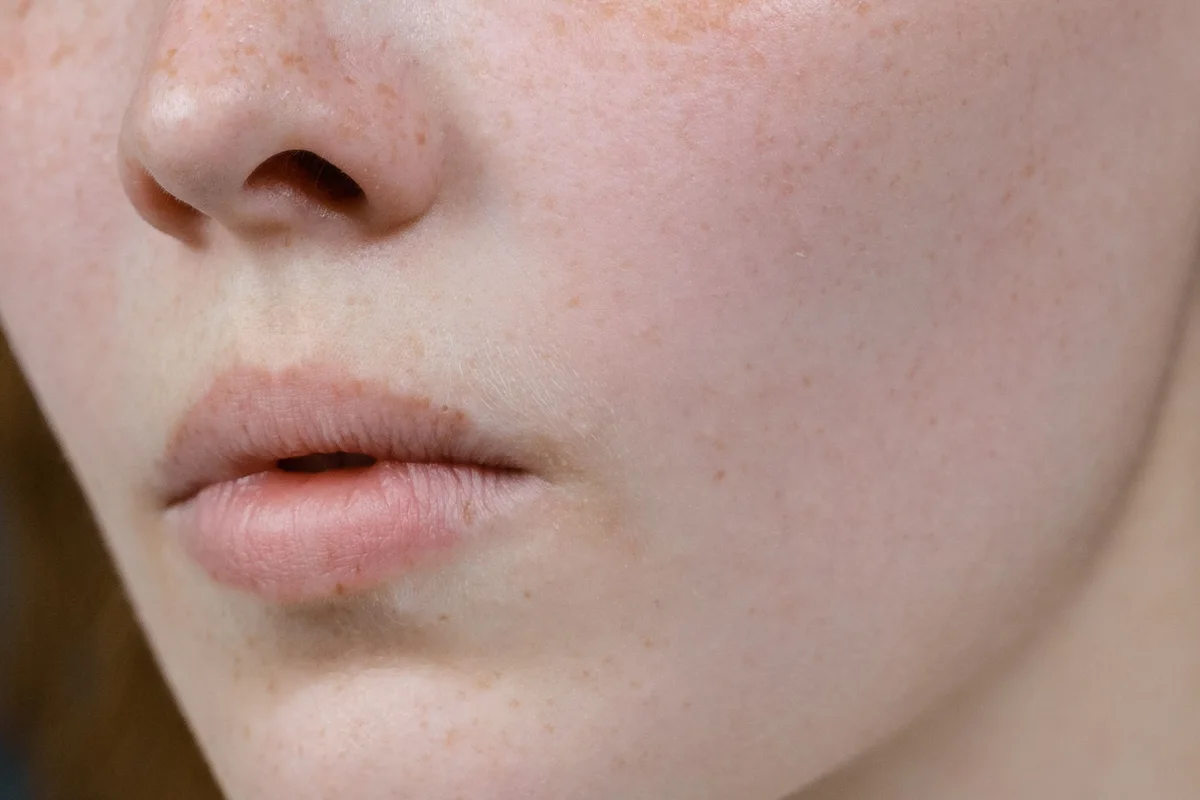
The dermatologic surgery society's page does not rank one non-invasive skin tightening device above another. It says the number of treatments needed depends on the device, its energy source, the location treated, and individual patient needs, so the number of treatments can vary between individuals. Focused ultrasound and radiofrequency applied to the skin's surface sit in the same non-invasive group, which the patient page on sagging skin lists with little or no downtime. Both organizations list redness and swelling as usual reactions for the non-invasive group as a whole, and the society also lists bruising as common. Neither organization reports these reactions separately for each treatment.
Sources
- American Academy of Dermatology. Many ways to firm sagging skin. https://www.aad.org/public/cosmetic/younger-looking/firm-sagging-skin ↗
- American Society for Dermatologic Surgery. Non-invasive Skin Tightening Treatments. https://www.asds.net/skin-experts/skin-treatments/non-invasive-skin-tightening-treatments ↗
- Contini M, Hollander MHJ, Vissink A, Schepers RH, Jansma J, Schortinghuis J. A Systematic Review of the Efficacy of Microfocused Ultrasound for Facial Skin Tightening. International Journal of Environmental Research and Public Health. 2023;20(2):1522. https://pmc.ncbi.nlm.nih.gov/articles/PMC9861614/ ↗
- Cleveland Clinic. Radio Frequency (RF) Skin Tightening: Benefits & Dangers. Last updated 02/04/2023. https://my.clevelandclinic.org/health/treatments/24683-radio-frequency-rf-skin-tightening ↗
Frequently asked questions
Which skin tightening treatment has no downtime?
The AAD describes downtime as "little or none" for non-invasive skin tightening, a group that includes focused ultrasound. It lists some redness and swelling as usual side effects of these treatments. In focused ultrasound, ultrasound energy is turned into heat in many small zones at set depths beneath the skin's surface, which is not cut or punctured. Those depths can differ from one treatment to another, and the depth a device reaches is something to look into before choosing a focused ultrasound treatment.
What is the best skin tightening treatment with minimal downtime?
Focused ultrasound and radiofrequency applied to the skin's surface are both non-invasive treatments, and the American Society for Dermatologic Surgery does not rank one non-invasive tightening device above another. It says many patients want to resume their usual activities later that day or on the following day, and it lists swelling, bruising, and redness as common reactions.
How long does redness last after focused ultrasound skin tightening?
In American Society for Dermatologic Surgery guidance, redness after non-invasive tightening, which includes ultrasound devices, typically clears within a few hours. If swelling or bruising occurs, it can last up to 1 to 2 weeks. Microfocused ultrasound is a type of focused ultrasound, and a 2023 systematic review covering its use on the face describes redness after treatment, with or without swelling, as transient.
Can focused ultrasound skin tightening cause bruising?
It can, although a 2023 systematic review covering facial treatment with microfocused ultrasound, a type of focused ultrasound, recorded bruising as an uncommon effect. For non-invasive tightening devices as a group, bruising is listed among the common reactions, together with swelling and redness.
Does little or no downtime mean there will be no redness or swelling?
No. Mild swelling, bruising, or redness may follow non-invasive tightening. Downtime refers to time away from work and daily routines, so little downtime does not mean no redness or swelling.
This content is for general information only and does not guarantee the results of any treatment. Any treatment decision should be made in consultation with a qualified medical professional.