What Is the Best Treatment for Skin Laxity? How Dermatologists Assess and Treat Loose Skin

Key Takeaways
- Products applied to the skin, fillers, ultrasound, non-invasive radiofrequency, and laser treatments are among the treatments dermatologists use for loose skin.
- A board-certified dermatologist knows how to evaluate the condition of the skin, the skin type, and the person's health before choosing treatment.
- The doctor reviews the person's medical history and performs a physical examination before non-invasive skin tightening, and the doctor and patient discuss expectations, potential risks, and outcomes.
- Loose skin is one of the signs of sun-damaged skin, and without sun protection, people may develop side effects from treatment, fail to get the results they seek, and continue to damage their skin.
- Skin tightening may not help when there is a large amount of sagging skin.
Skin laxity, or loose skin, can be treated in several ways, and dermatologists evaluate the skin before they choose among them. Guidance on what the doctor reviews and discusses with the patient before a non-invasive tightening procedure is published by the American Society for Dermatologic Surgery (ASDS).
The American Academy of Dermatology (AAD) says a board-certified dermatologist, an expert familiar with the different skin-tightening treatments, can determine which option suits a person's concerns. Its page on treating sun-damaged skin lists several treatments for loose skin without ranking them.
Which treatment is best for skin laxity?
For loose skin, the patient guide on how dermatologists treat sun-damaged skin lists products applied to the skin, fillers, ultrasound, non-invasive radiofrequency, and laser treatments, and it does not rank them (How dermatologists treat sun-damaged skin).
That guide counts loose skin among the signs of photoaging, the changes that ultraviolet light causes in the skin over time. The academy's guide to firming sagging skin says skin tightening "may not be helpful" when there is a large amount of sagging skin (Many ways to firm sagging skin).
Treatment of skin laxity in dermatology
A board-certified dermatologist knows how to evaluate the skin before choosing treatment, and dermatologists often use more than one type of treatment, which helps to treat different signs of aging. This evaluation, made before treatment is chosen, covers the condition of the skin, the skin type, and the person's health, which vary between individuals. According to the guide on treating sun-damaged skin, results depend largely on the skill and knowledge of the person performing the treatment.
Checks before a dermatologist treats loose skin
The ASDS says that before non-invasive skin tightening, the doctor reviews the person's medical history and performs a physical examination, and that the doctor and patient discuss expectations, potential risks, and outcomes (Non-invasive Skin Tightening Treatments).
Where the skin is loose and how much it sags are two things a person can note before that conversation, since skin tightening may not help when a large amount of skin is sagging. The same guidance names the face, eyelids, jowls, neck, chest, arms, buttocks, thighs, knees, and abdomen as places where laxity can be treated with non-invasive tightening, and Non-Surgical Jawline Lifting: What Changes Along the Jaw and What Skin Tightening Can Address covers the jowls and neck in more detail.
Sun protection alongside loose-skin treatment
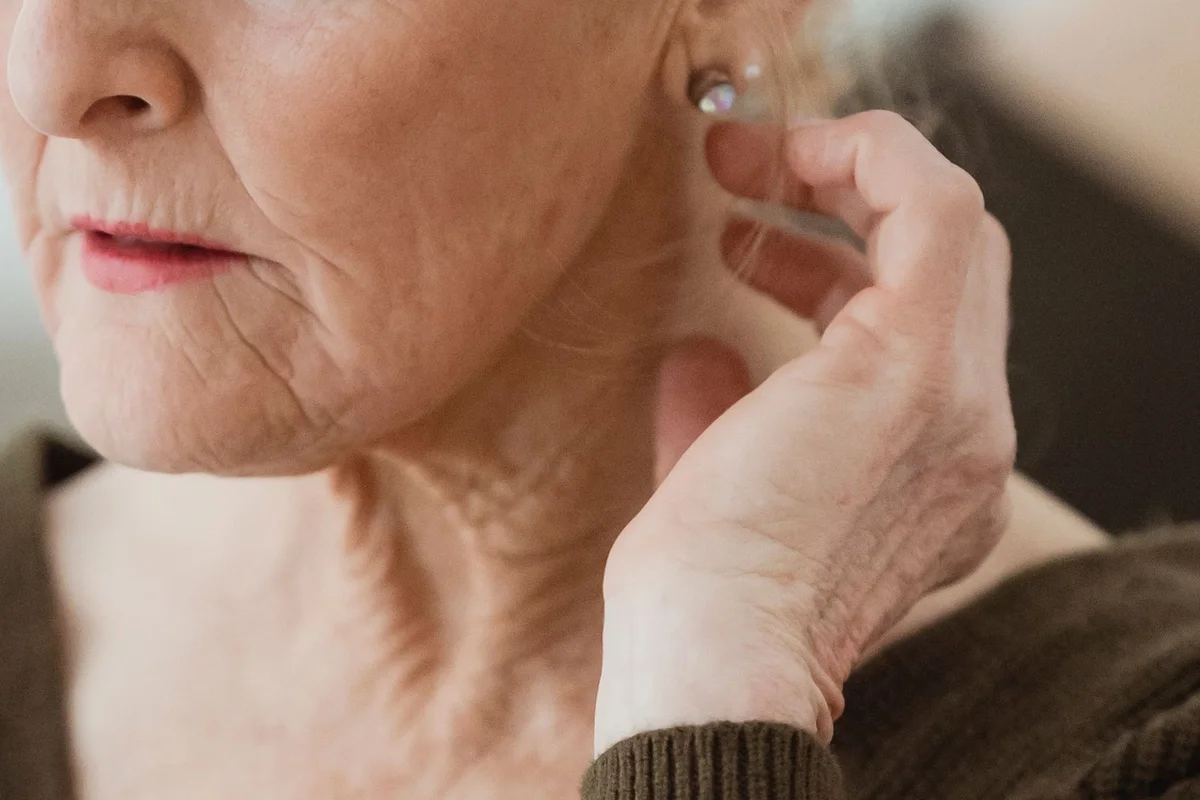
Loose skin is one of the signs of sun-damaged skin, and dermatologists call sun protection essential alongside treatment for sun-damaged skin. Without protection from ultraviolet rays, people may develop side effects from treatment, fail to get the results they seek, and continue to damage their skin. Dermatologists advise using sun protection every day, even on overcast or cold days, and stopping the use of tanning beds (How dermatologists treat sun-damaged skin).
Focused ultrasound in the treatment of loose skin
Ultrasound is among the treatments for loose skin. According to the AAD, dermatologists use ultrasound to deliver heat deep in the skin, and that heat can cause the body to make more collagen. Its guide to firming sagging skin groups ultrasound with the non-invasive procedures, in which the skin is not cut or punctured but some temporary redness and swelling may follow (Many ways to firm sagging skin).
Clinicians can deliver a focused ultrasound treatment with more than one transducer, the part of the device that produces the ultrasound. A 2023 systematic review of microfocused ultrasound, a form of focused ultrasound, notes that different transducers can be used with different frequency and energy settings, and that ultrasound from a higher-frequency transducer penetrates tissue less deeply than ultrasound from a lower-frequency one. The review also notes that multiple passes over the same area can be made at different depths and in different directions, and that facial areas differ in muscle tone and in the thickness of the skin and the tissue beneath it (A Systematic Review of the Efficacy of Microfocused Ultrasound for Facial Skin Tightening). The treating clinician chooses which transducers to use, and on which areas, as part of the treatment plan. The set of transducers each device offers can also go into a side-by-side comparison of devices before a treatment is chosen.
Sources
- American Academy of Dermatology. How dermatologists treat sun-damaged skin. Last updated 10/30/25. https://www.aad.org/public/everyday-care/sun-protection/sun-damage-skin/wrinkles-sun-damage-can-be-treated ↗
- American Academy of Dermatology. Many ways to firm sagging skin. https://www.aad.org/public/cosmetic/younger-looking/firm-sagging-skin ↗
- American Society for Dermatologic Surgery. Non-invasive Skin Tightening Treatments. https://www.asds.net/skin-experts/skin-treatments/non-invasive-skin-tightening-treatments ↗
- Contini M, Hollander MHJ, Vissink A, Schepers RH, Jansma J, Schortinghuis J. A Systematic Review of the Efficacy of Microfocused Ultrasound for Facial Skin Tightening. International Journal of Environmental Research and Public Health. 2023;20(2):1522. https://pmc.ncbi.nlm.nih.gov/articles/PMC9861614/ ↗
Frequently asked questions
What is the best treatment for skin laxity?
The AAD lists ultrasound among the treatments for loose skin on its page about treating sun-damaged skin, without ranking them. It says a board-certified dermatologist who knows the different skin-tightening treatments can determine which one suits a person's concerns. Focused ultrasound heats small spots of tissue at set depths under the skin without cutting or puncturing it. Transducers, the parts of a device that produce the ultrasound, differ in frequency and so in how deeply the ultrasound reaches. Before deciding on focused ultrasound, a person can find out which transducers the device uses and how deep each one reaches.
How do dermatologists treat skin laxity?
A board-certified dermatologist knows how to evaluate the condition of the skin, the skin type, and the person's health before choosing treatment. Dermatologists often use more than one type of treatment, which helps to treat different signs of aging.
Which treatment works best for facial skin laxity?
The American Society for Dermatologic Surgery says non-invasive skin tightening that uses laser, radiofrequency, or ultrasound energy can be used to treat laxity on the face, eyelids, jowls, and neck, and its page does not rank these energy types. Skin tightening may not help when a person has a large amount of sagging skin.
What is the best treatment for skin tightening?
Ultrasound, non-invasive radiofrequency, and laser treatments all appear on the unranked list of loose-skin treatments in the AAD's guide to treating sun-damaged skin, which also says results depend largely on the skill and knowledge of the person performing the treatment.
Why does sun protection matter when treating loose skin?
Loose skin is one of the signs of sun-damaged skin. Without protection from ultraviolet rays, people treated for sun-damaged skin may develop side effects from treatment, fail to get the results they seek, and continue to damage their skin. Dermatologists call sun protection essential and advise using it every day, even on overcast or cold days.
This content is for general information only and does not guarantee the results of any treatment. Any treatment decision should be made in consultation with a qualified medical professional.