Are In-Office Eye Lifting Treatments Safe? Burns, Side Effects, and What the Evidence Says

Key Takeaways
- "Safe" is not a fixed trait of a treatment. It depends on the device, the settings, the person being treated, and most of all the operator.
- The skin around the eye is the thinnest on the face, which shrinks the gap between an effective dose and a thermal injury.
- Most side effects are minor and temporary. A 2007 follow-up of 757 monopolar radiofrequency sessions recorded second-degree burns in 2.7% of them.
- Screening changes the answer, and it is the clinician's reading of the skin and the history that does the screening.
"Are in-office eye lifting treatments safe?" It depends on what you mean. This article covers the non-surgical options a clinic can perform in a treatment room, meaning energy-based devices and injections rather than eyelid surgery. The eye area leaves less room for error than anywhere else on the face, so a few things are worth understanding before you book.
The short answer
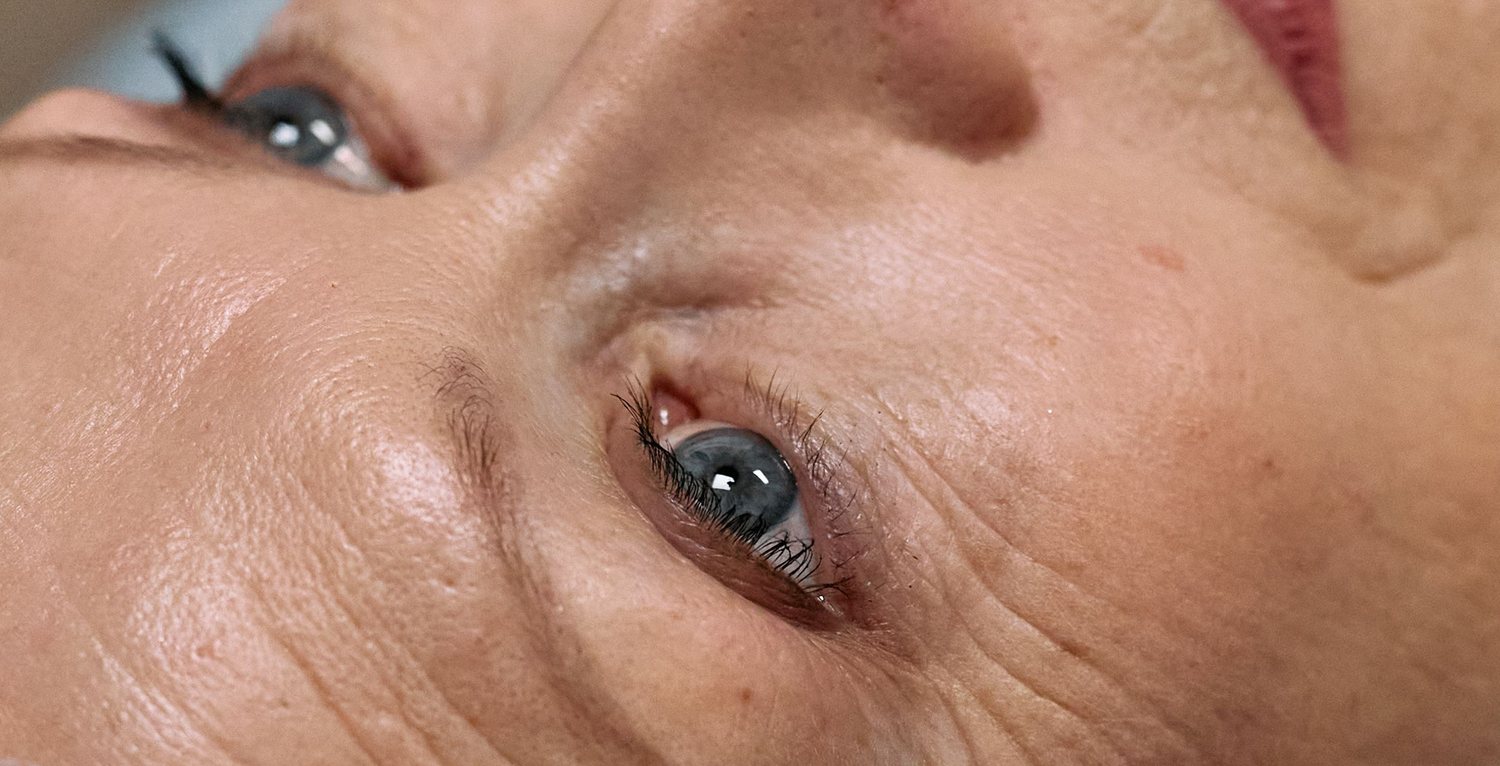
For most healthy adults, an in-office eye treatment performed by a qualified clinician is low-risk, and the reactions people notice are minor and fade on their own. For non-invasive skin-tightening procedures the American Academy of Dermatology reports little risk of other side effects beyond redness and swelling when performed by a board-certified dermatologist. That page covers the face and body rather than the eye area specifically.
That last condition carries most of the weight. One case series documented ten adverse events after non-invasive radiofrequency for cosmetic use: seven burns and three cases of persistent erythema. Nine of the ten patients had been treated by non-dermatologists, and the authors concluded that radiofrequency "is not a simple and easy modality." The same device is routine in experienced hands and a hazard without them.
Why the eye area raises the stakes
Skin around the eye is the thinnest on the face, and that one fact drives nearly every safety decision made in the periocular area. A high-frequency ultrasound study of 45 women measured median skin thickness at 573.5 μm on the upper eyelid versus 1,456.5 μm at the forehead. That is under 40% of the forehead's thickness, with a dense network of vessels sitting just beneath. Less tissue between an energy source and the structures under it means a smaller margin for error, which is why devices used here rely on small tips, conservative settings, and active surface cooling.
What "safe" means for each type of treatment
Concerns around the eye usually fall into one of three categories: looseness and hooding, fine lines and crow's feet, or hollowing and dark circles. The sections below describe what each type of treatment does and what has been reported to go wrong with it.
Monopolar radiofrequency (RF)
RF current passes through the skin, the electrical resistance of the tissue turns it into heat, and that heat coagulates tissue at depth. Surface cooling is the main safety lever: the epidermis has to stay protected while the dermis heats, so on skin this thin the cooling has to hold through the whole pass.
Burns are the adverse event people ask about. A follow-up of 290 patients across 757 monopolar RF sessions recorded second-degree burns in 2.7% of sessions; the authors concluded the technique is safe at moderate energy settings without overlapping passes, while noting their own burn rate ran somewhat higher than in other published series. That study is from 2007 and used a first-generation 1 cm² tip at an average 81 J/cm², so treat it as a worst case rather than a current figure.
Focused ultrasound (HIFU)
Focused ultrasound (HIFU) deposits heat at set depths below the surface rather than across the whole dermis. Around the eye it is used cautiously, because those focal points sit close to delicate structures. A published case report describes a woman whose eyelid-tightening ultrasound raised the pressure inside the treated eye to 31 mmHg and left her uncorrected vision at 20/200, correctable back to 20/20 with lenses. The authors warned that an ultrasound probe applied around the eyebrow "should be strictly forbidden." Depth and energy settings, and keeping the focal point away from the bony orbit and the globe, decide the outcome around the eye.
Injections into the expression muscles
Injections placed in the muscles that create expression lines act on muscle rather than by heating tissue, so the safety questions here are depth and placement rather than thermal dose.
Regenerative injectables
Polynucleotide preparations and low-concentration hyaluronic acid skin boosters are placed into the dermis to support hydration and skin quality. They mostly leave brief needle marks or small bruises. The under-eye area bruises readily because the vessels sit close to the surface.
Fractional resurfacing laser
Fractional laser resurfaces the skin but carries more risk of scarring than the gentler methods, so near the eye it is used with particular care, and corneal shields are standard.
Volnewmer: device facts
Volnewmer is a monopolar radiofrequency device manufactured by CLASSYS. It runs at 6.78 MHz, and Korea's MFDS classifies it as a general-purpose electrosurgical device.
Three points about how the device is built:
- Four tips cover 0.25, 3.0, 4.0, and 16.0 cm² of skin. The I Tip is the smallest at 0.25 cm².
- Cooling runs continuously through the handpiece, adjustable from OFF to 12°C across six levels and held at the set temperature throughout the pass, including when energy is not being delivered.
- The tip head tilts through 360°, and automatic impedance checking reads skin resistance before the system begins cooling and delivering energy.
These are design choices, not performance claims. Whether radiofrequency suits your skin, and at what settings, is a clinical judgment. Volnewmer is a device used by physicians, so the treatment is available in places such as dermatology clinics.
What actually goes wrong
Expected reactions are temporary and resolve on their own. Radiofrequency leaves redness or mild swelling. Injectables leave needle marks or bruising. Laser resurfacing needs healing time before the skin settles.
Uncommon adverse effects are reported across energy-based and injection treatments, and they include burns from thermal energy, pigment change, temporary changes in sensation, and temporary lid or brow drooping from injection near the lower lid.
What the examination decides
"Is it safe" is not answered by the category. It is answered at the examination, where the clinician reads the skin and the medical history and then sets the device, lowers the setting, or decides against running it that day. Individual responses vary.
Cost is set independently by each clinic and varies by country and by the area treated, so confirm it directly with the provider.
Questions worth asking about the device
- Which device is in the treatment room, and whether it has a tip sized for the eye area.
- How the surface is cooled while the deeper layer heats, and whether the cooling holds through the whole pass.
- Who will actually perform the procedure, and their experience with the eye area specifically.
Volnewmer is a general-purpose electrosurgical device that uses radiofrequency current for coagulation of tissue. This product is a medical device. Read the instructions for use and the precautions before use.
Sources
- American Academy of Dermatology. Skin tightening procedures. https://www.aad.org/public/cosmetic/younger-looking/firm-sagging-skin ↗
- Chung JY, Lee JH. Adverse Events after Noninvasive Radiofrequency Treatment for Cosmetic Uses. Med Lasers. 2015;4(1):16-19. https://doi.org/10.25289/ML.2015.4.1.16 ↗
- Korzekwa S, Matusz K, Kukulski M, et al. Quantitative Analysis of the Human Face Skin Thickness: A High-Frequency Ultrasound Study. J Clin Med. 2025;14(23):8401. https://pmc.ncbi.nlm.nih.gov/articles/PMC12693017/ ↗
- de Felipe I, Del Cueto SR, Pérez E, Redondo P. Adverse reactions after nonablative radiofrequency: follow-up of 290 patients. J Cosmet Dermatol. 2007;6(3):163-166. https://pubmed.ncbi.nlm.nih.gov/17760693/ ↗
- Chen Y, Shi Z, Shen Y. Eye damage due to cosmetic ultrasound treatment: a case report. BMC Ophthalmol. 2018;18(1):214. https://pmc.ncbi.nlm.nih.gov/articles/PMC6114535/ ↗
Frequently asked questions
Are in-office eye lifting treatments safe?
For most healthy adults treated by a qualified clinician, the non-surgical options, meaning energy-based devices and injections, are low-risk, and the common reactions of redness, mild swelling, and short-lived bruising resolve on their own. Safety depends heavily on the device, the settings, and the operator's experience: in a case series of ten adverse events after non-invasive cosmetic radiofrequency, nine of the ten patients had been treated by non-dermatologists. The thin skin around the eye narrows the margin for error, so who performs the treatment matters as much as the category itself. Individual responses vary, and a physician's assessment is needed.
What are the most common side effects around the eyes?
Temporary redness, mild swelling, and brief bruising are the usual reactions, and they resolve without treatment. Less common effects reported across energy-based and injection treatments include burns from thermal energy, pigment change, temporary changes in sensation, and temporary lid or brow drooping after injection near the lower lid.
Who should avoid these treatments?
No published list settles this. It is settled at the examination, where the clinician weighs the skin, the history, and the setting the device would run at. What makes the eye area the tightest case is measurable: skin on the upper eyelid measures under 40% of the forehead's thickness, so the gap between an effective dose and a thermal injury is narrower there than anywhere else on the face.
Does radiofrequency around the eye burn the skin?
It can if the energy is too high or the surface is not cooled, which is why cooling is central to safe RF. A 2007 follow-up of 757 monopolar RF sessions using a first-generation tip recorded second-degree burns in 2.7% of sessions. Those authors recommended moderate energy settings without immediately overlapping passes, and noted their own burn rate ran higher than in other published series.
How can I tell whether a clinic is doing this safely?
Ask who will perform the procedure and their experience with the eye area, whether the device has a tip small enough for the eye area, and how the surface is cooled while the deeper layer is heated. In the case series of ten adverse events cited above, nine of the ten patients had been treated by non-dermatologists.
This content is for general information only and does not guarantee the results of any treatment. Any treatment decision should be made in consultation with a qualified medical professional.