Long-Term Breakout Control and Where In-Office Acne Devices Fit

Key Takeaways
- Lasers and other light treatments rarely clear acne by themselves, the American Academy of Dermatology notes, and dermatologists may pair them with a medicine applied to the skin.
- The strong recommendations in the 2024 AAD acne guideline all go to medicines applied to the skin or taken by mouth, none to a device.
- A Cochrane review of light treatments for acne could not say how long any benefit lasted, so the evidence does not show breakouts staying away after sessions end.
- Breakouts start in a plugged hair follicle and its oil gland, while most depressed acne scars come from collagen lost in the dermis.
No in-office device has been shown to stop acne breakouts long term on its own. In U.S. dermatology guidance, a device session is something added to an acne plan, not a replacement for the rest of it.
RF microneedling is one of those devices, listed in patient guidance among treatments for acne scars. Its fine needles enter the skin and act as electrodes. The tissue resists the radiofrequency current they release in the dermis, and that resistance turns the current into heat, which coagulates small zones of tissue. Responses to device treatment can vary between individuals.
Can in-office devices stop acne breakouts long term?
In-office devices can be one part of long-term acne care, used together with other treatment, and the evidence does not show how long breakouts stay away once sessions end. On its patient page about lasers and lights, the American Academy of Dermatology (AAD) says these treatments rarely clear acne on their own. It adds that a dermatologist may recommend using them with another treatment, such as a medicine applied to the skin (Lasers and lights: How well do they treat acne?). It also states that there is currently no way to know who will see clearer skin after a laser or light treatment, or how much.
The academy's 2024 acne guideline points the same way: its strong recommendations all go to medicines applied to the skin or taken by mouth, and no device is among them (Guidelines of care for the management of acne vulgaris). Office procedures that dermatologists add when topical treatment falls short are set out in Adult acne when topicals stop working.
Device targets in acne-prone skin, from the pore to the dermis
Light treatments are shone onto the surface of the skin and are used for certain kinds of breakouts, while RF microneedling carries current through needles into the dermis.
| Method | What it uses | What it acts on | Patient guidance that lists it |
|---|---|---|---|
| Blue, red, or blue and red light | Visible light shone on the skin | Pimples; not blackheads, whiteheads, cysts, or nodules | Acne lasers and lights |
| Infrared light | Light outside the visible range | Pimples, including those on the back | Acne lasers and lights |
| Photodynamic therapy | A light-sensitizing solution, then a laser or light device | Acne-prone skin where the solution was applied | Acne lasers and lights |
| Chemical peel | A chemical solution applied to the skin | Dead skin cells clogging pores, and excess oil | Acne treatment |
| RF microneedling | Radiofrequency current through needle electrodes | The dermis beneath the surface | Acne scar treatment |
The light rows draw on the academy's lasers and lights page, the chemical peel row on its acne treatment page (Acne: Diagnosis and treatment), and the RF microneedling row on its acne scar page.
A 2024 review of the physics behind the method describes needles that pass through the outer layer of skin and then act as electrodes. They send short pulses of radiofrequency energy to a selected depth in the dermis, where a zone of coagulation forms (Physics of fractional microneedle radiofrequency – A review).
As current leaves those needles, the skin's electrical resistance keeps changing, and RF microneedling systems differ in how they adjust their output when it changes during a single pass of the handpiece.**
**Temperature is one of the things that changes resistance. The physics review explains that tissue impedance (its resistance to the current) falls as the tissue warms, until the tissue coagulates. Once the water in the tissue starts to evaporate, impedance climbs sharply. Because radiofrequency current favors warmer tissue, a change in temperature also changes where the current flows. On the output side, a 2024 review of electrosurgery notes that the generator regulates its voltage, its power, or both, within a maximum energy limit, and that the details vary between manufacturers (Electrosurgery: heating, sparking and electrical arcs). So how a system adjusts its output as resistance shifts during a pass is one engineering difference between RF microneedling systems, and a fair thing to ask about when comparing them.
Breakouts after device sessions end
Published research has not shown breakouts staying away for years after device sessions end. A Cochrane review of light treatments for acne, including photodynamic therapy, could not say how long any benefit lasted (Light therapies for acne), so for light-based devices the long-term part of the question remains open.
Acne itself can last well past the teenage years. The National Institute of Arthritis and Musculoskeletal and Skin Diseases (NIAMS) notes that for most people, acne tends to go away by their thirties, while some people still have it in their forties and fifties (Acne). For them, keeping breakouts under control is a concern that lasts for years.
Breakouts in the follicle and scars in the dermis
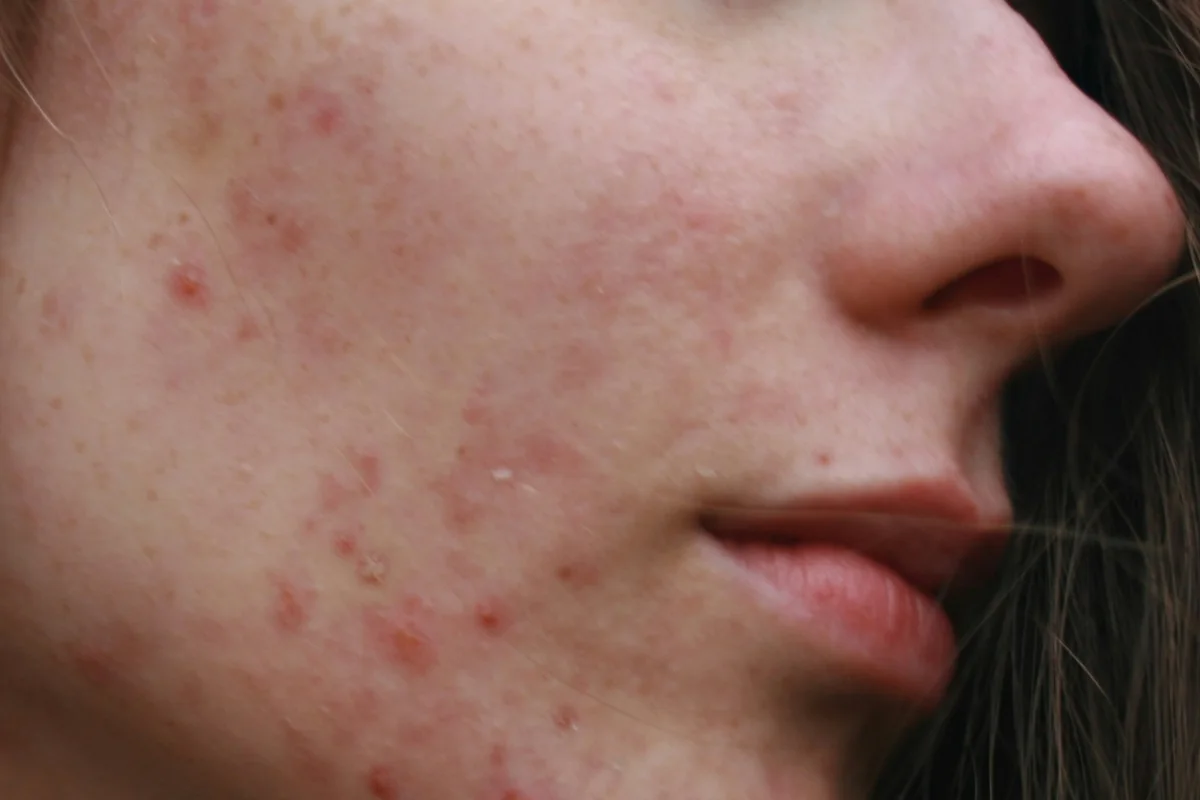
A breakout and a depressed acne scar form in different structures, so treatments for acne-prone skin and treatments for scars are aimed at different targets. NIAMS describes how acne forms: hair, sebum (oil), and skin cells stick together inside the pore, bacteria grow in the plugged follicle, and inflammation follows, with swelling, redness, heat, and pain.
Most acne scars, by contrast, are atrophic. DermNet, a dermatology reference from New Zealand, attributes them to an inflammatory response that destroys collagen fibers in the dermis (Acne scarring). The academy's acne scar page lists RF microneedling among the treatments for depressed scars and describes it as radiofrequency combined with needles that puncture the skin (Acne scars: Consultation and treatment). How RF microneedling studies on scars differ in their settings is covered in How RF microneedling treatments for acne scars differ.
Sources
- American Academy of Dermatology. Lasers and lights: How well do they treat acne? https://www.aad.org/public/diseases/acne/derm-treat/lasers-lights ↗
- Reynolds RV, Yeung H, Cheng CE, et al. Guidelines of care for the management of acne vulgaris. Journal of the American Academy of Dermatology. 2024;90(5):1006.e1-1006.e30. https://pubmed.ncbi.nlm.nih.gov/38300170/ ↗
- Chandra S, Mysore V, Shah S, Malayanur D, S R S. Physics of fractional microneedle radiofrequency – A review. Journal of Cutaneous and Aesthetic Surgery. 2024;17(3):177-183. https://pmc.ncbi.nlm.nih.gov/articles/PMC11497551/ ↗
- Koninckx PR, Ussia A, Amro B, et al. Electrosurgery: heating, sparking and electrical arcs. Facts, Views & Vision in ObGyn. 2024;16(3):281-290. https://pmc.ncbi.nlm.nih.gov/articles/PMC11569438/ ↗
- Barbaric J, Abbott R, Posadzki P, et al. Light therapies for acne. Cochrane Database of Systematic Reviews. 2016;9:CD007917. https://pmc.ncbi.nlm.nih.gov/articles/PMC6457763/ ↗
- National Institute of Arthritis and Musculoskeletal and Skin Diseases. Acne. https://www.niams.nih.gov/health-topics/acne ↗
- DermNet. Acne scarring. Last reviewed August 2023. https://dermnetnz.org/topics/acne-scarring ↗
- American Academy of Dermatology. Acne scars: Consultation and treatment. Last updated 12/8/23. https://www.aad.org/public/diseases/acne/derm-treat/scars/treatment ↗
- American Academy of Dermatology. Acne: Diagnosis and treatment. Last updated 6/19/24. https://www.aad.org/public/diseases/acne/derm-treat/treat ↗
Frequently asked questions
Can you look into which in-office device treatments actually stop breakouts long term?
No in-office device is known to keep breakouts away long term by itself, and U.S. dermatology guidance places devices alongside other acne treatment. RF microneedling is one of these devices. Its needles pass into the dermis and act as electrodes. The tissue's resistance turns the current they release into heat, which coagulates small zones of tissue around each needle. Responses to device treatment vary between individuals. Whether any device belongs in a given plan is decided by a dermatologist after examining the skin. RF microneedling systems also differ in how their output follows changes in skin resistance during a pass, a detail to weigh when comparing where to be treated.
Can you check which in-office device treatments work best for acne-prone skin and the scars it leaves?
Choosing a device here starts with separating breakouts from scars, because the two sit in different structures: breakouts begin in plugged hair follicles and their oil glands, and most acne scars come from collagen lost in the dermis. AAD patient guidance reflects that split. Its acne pages list light treatments and chemical peels, and its acne scar page lists RF microneedling. Which approach suits a particular mix of breakouts and scars varies between individuals.
Do acne breakouts come back after in-office device treatment stops?
The evidence does not show how long breakouts stay away once device sessions end: a Cochrane review of light treatments for acne could not determine how long benefits lasted. That gap matters because some people still have acne in their forties and fifties, as the National Institute of Arthritis and Musculoskeletal and Skin Diseases (NIAMS) notes.
Is RF microneedling used for active acne or only for acne scars?
In U.S. dermatology patient guidance it is listed among the treatments for depressed acne scars rather than among the treatments for breakouts. The method places radiofrequency energy in the dermis, the layer where atrophic scars form, through needles that pierce the skin surface.
This content is for general information only and does not guarantee the results of any treatment. Any treatment decision should be made in consultation with a qualified medical professional.