What Decides the Number of In-Office Sessions for Nasolabial Folds

Key Takeaways
- The number of sessions for nasolabial folds depends on the device and its settings, and on the person being treated.
- Thinner skin, a shrinking fat layer, and jawbone loss shape how a fold looks with age.
- Each energy device type turns a different form of energy into heat inside skin tissue.
- A fold that shows only with a smile in younger years can stay visible at rest later in life.
Before anyone can say how many in-office sessions nasolabial folds will need, two things have to be clear: what has changed beneath the fold, and how the chosen device acts on the tissue.
Radiofrequency treatment from the skin's surface sends an electrical current into the skin through a tip that rests on it. The tissue resists that current, and the resistance turns the electrical energy into heat.
How many in-office treatment sessions do nasolabial folds need?
How many in-office sessions nasolabial folds need depends on two things, the device and the face being treated, and both have to be assessed first. In its patient guide to non-invasive skin tightening, the American Society for Dermatologic Surgery links the number of treatments to the device used and the area treated. The energy source and its level, the condition being treated, the person's age, and individual characteristics also shift that number (Non-invasive Skin Tightening Treatments).
Fold depth and facial structure vary between individuals, so a session count reported for one face does not carry over to another.
Device settings and tissue factors behind the number of skin tightening sessions
The skin tightening guide cited above names factors that fall into two groups: equipment settings and features of the tissue. Equipment covers the device and the energy it delivers, while tissue covers the area, the condition, and the person.
| Factor | Belongs to | What it covers |
|---|---|---|
| Device | Equipment | Radiofrequency, focused ultrasound, or laser system |
| Energy source and level | Equipment | Type of energy and its output setting |
| Area treated | Tissue | Facial region receiving the energy |
| Condition treated | Tissue | Fold shaped by skin, fat, and bone changes |
| Age and individual characteristics | Tissue | Differences in skin and underlying tissue between people |
A session count tells how many visits a plan has. Within each visit, a radiofrequency device delivers its energy shot by shot, and the way each shot leaves the tip falls under "Energy source and level" in the table above. Some devices send the energy of one shot as a single pulse, one unbroken stretch of current, while others divide the shot into several pulses with short pauses between them. A 2024 physics review of RF microneedling describes a pulse as a wave with an "on" period and an "off" period that repeat at regular intervals. In single mode, one energy wave passes into the skin each time the foot switch is pressed; in repeat mode, several waves pass during the "on" period (Physics of fractional microneedle radiofrequency – A review).**
Pulse pattern is one of several delivery settings that differ from machine to machine. The same review notes that such parameters depend on the product and vary with each proprietary machine. Timing is a setting in its own right because of how heat forms in tissue. The review explains this with Joule's law: the energy delivered rises with the current, the tissue's resistance, and the time the current is applied. A 2024 article on how electrosurgery heats tissue adds one more factor, the duty cycle, meaning the share of time the current is actually flowing. A current that flows only part of the time needs a higher voltage to deliver as much energy as a steady one. The article also links the way tissue heats to the speed at which energy arrives as well as to the amount (Electrosurgery: heating, sparking and electrical arcs).
**Two shots with the same total energy can therefore spread it over time in different ways. The number of pulses in a shot, the length of each pulse, and the pause between pulses are settings separate from the total energy. Two plans with the same number of visits can also involve devices that release each shot differently. When two radiofrequency treatments are compared, the visit count and the way each device releases a shot, as one pulse or as several, can be weighed together.
On the tissue side, the "Condition treated" row refers to the skin, fat, and bone changes described in the next section. A separate article on repeat radiofrequency sessions sets out what is known about repeating these treatments.
Nasolabial fold anatomy: skin, fat, and jawbone changes
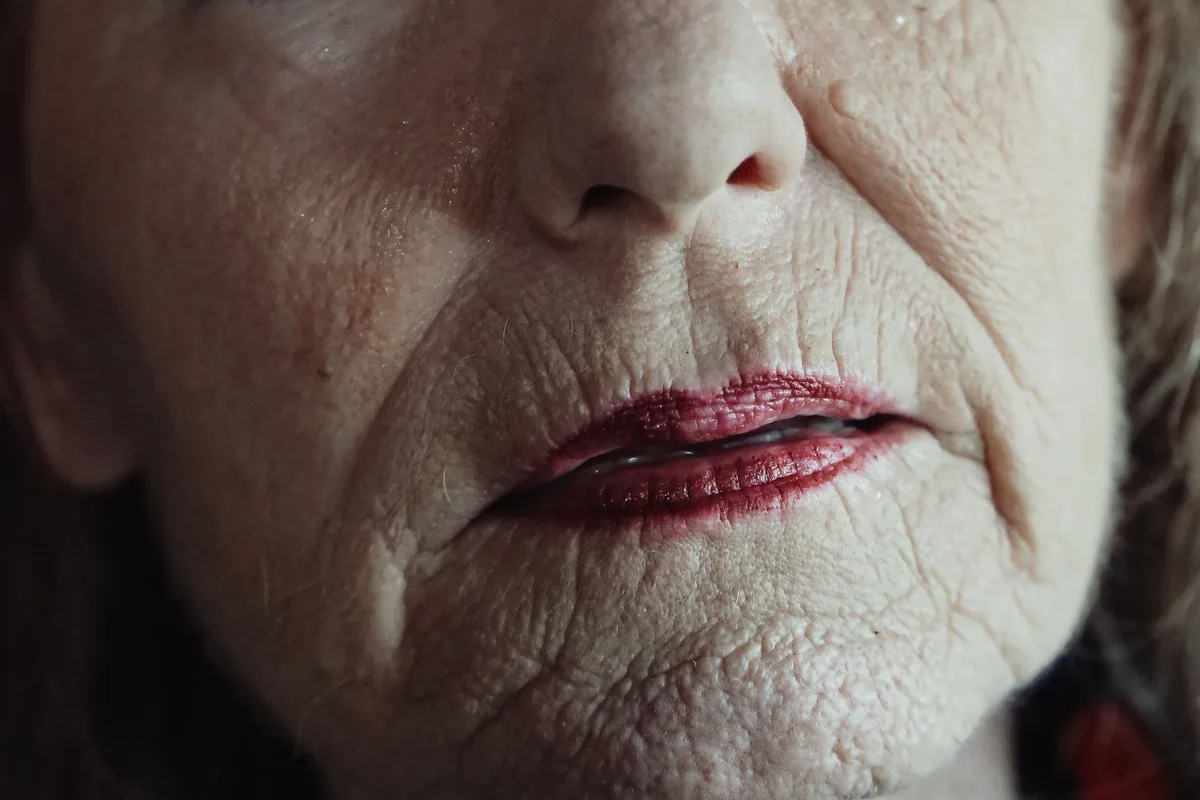
A nasolabial fold is the crease running from each side of the nose to the corner of the mouth. The way it looks with age reflects changes in skin, in the underlying fat, and in the jawbone (Nasolabial Folds (Smile Lines): Causes & Treatment, Prevention). MedlinePlus links facial aging to thinning skin and a loss of muscle tone. The skin also dries out, and the fat layer beneath it shrinks. As the jaw loses bone mass, the lower face gets smaller and the nose and mouth look more prominent (Aging changes in the face).
Cleveland Clinic adds that the cheekbones can flatten with age and that gravity can pull loose skin in the area downward. The skin also holds less collagen and elastin, the substances that let it keep its original shape, and smoking and sun damage both break them down.
Folds of similar depth do not always share the same underlying changes in skin, fat, and bone. A separate guide to in-office options for nasolabial folds describes what each option does to the tissue.
Nasolabial folds seen when smiling versus at rest
In younger faces, nasolabial folds may show only during a smile or a laugh and fade once the face relaxes. Over time, the same lines can deepen and remain visible whether the face is smiling or not. The two folds look alike in some faces and differ from side to side in others (Nasolabial Folds (Smile Lines): Causes & Treatment, Prevention).
Radiofrequency, ultrasound, and laser: how each energy type heats skin tissue
The American Society for Dermatologic Surgery groups radiofrequency, ultrasound, and laser devices together as ways of delivering heat to skin tissue. Each device type carries a different energy: electric current, sound waves, or light. Radiofrequency current turns into heat where the tissue resists it, while therapeutic ultrasound is focused on a target to heat the tissue there (Ultrasound). Because the society's skin tightening guide ties the number of treatments to the device and its energy source, a count reported for an ultrasound device says little about a radiofrequency plan, and the reverse. In-Office Skin Tightening and Lifting explains which layer of the face each treatment acts on.
Sources
- American Society for Dermatologic Surgery. Non-invasive Skin Tightening Treatments. https://www.asds.net/skin-experts/skin-treatments/non-invasive-skin-tightening-treatments ↗
- Chandra S, Mysore V, Shah S, Malayanur D, S R S. Physics of fractional microneedle radiofrequency – A review. Journal of Cutaneous and Aesthetic Surgery. 2024;17(3):177-183. https://pmc.ncbi.nlm.nih.gov/articles/PMC11497551/ ↗
- Koninckx PR, Ussia A, Amro B, et al. Electrosurgery: heating, sparking and electrical arcs. Facts, Views & Vision in ObGyn. 2024;16(3):281-290. https://pmc.ncbi.nlm.nih.gov/articles/PMC11569438/ ↗
- Cleveland Clinic. Nasolabial Folds (Smile Lines): Causes & Treatment, Prevention. Last updated 05/18/2022. https://my.clevelandclinic.org/health/diseases/23027-nasolabial-folds ↗
- MedlinePlus. Aging changes in the face. Review date 7/15/2024. https://medlineplus.gov/ency/article/004004.htm ↗
- National Institute of Biomedical Imaging and Bioengineering. Ultrasound. https://www.nibib.nih.gov/science-education/science-topics/ultrasound ↗
Frequently asked questions
How many in-office treatment sessions do I need to improve my nasolabial folds?
Working out that number starts with knowing the equipment that will be used and the person being treated. Radiofrequency applied through a tip resting on the skin is one of the in-office options: the tissue resists the electrical current, and that resistance turns it into heat. Fold depth, facial structure, and the condition of the skin vary between individuals. The American Society for Dermatologic Surgery lists the device, energy level, area, condition, age, and individual characteristics among the factors behind the number of treatments. Whether any treatment is appropriate at all is for the clinician who examines you to decide. Radiofrequency devices also differ in whether each shot leaves the tip as a single pulse or as repeated pulses, a device detail worth asking about before choosing where to be treated.
Is there any downtime after getting in-office treatments to improve my nasolabial folds?
Yes, some people have visible reactions afterward. The American Society for Dermatologic Surgery notes that mild swelling, bruising, or redness may follow non-invasive skin tightening procedures. Nasolabial Fold Treatment Downtime: Recovery and Back-to-Work Timing covers recovery in more detail.
Does a deeper nasolabial fold mean more sessions?
Depth is only one of the things to know before a count is set. It falls under the condition being treated, one of the factors listed alongside the device, its energy level, the area, and the person's age and individual characteristics. Two folds of similar depth can rest on different changes in the skin, the fat layer, and the jawbone, so a count cannot be read from depth alone.
What can I do in my late thirties to further prevent my nasolabial folds from forming?
MedlinePlus links sun exposure and smoking to wrinkles developing more quickly, which points to two habits: limiting time in the sun and not smoking. Cleveland Clinic also names smoking and sun damage among the causes of nasolabial folds, because both break down collagen and elastin in the skin. Preventing Nasolabial Folds in Your Late 30s covers these habits in more detail.
This content is for general information only and does not guarantee the results of any treatment. Any treatment decision should be made in consultation with a qualified medical professional.