RF microneedling pain and downtime: what affects both, and how long reactions last

Key Takeaways
- Complications vary with device type, operator experience, skin type and treatment settings, according to a 2026 complications review.
- Pain during RF microneedling rises as the energy setting and needle depth increase, a 2026 complications review reports, and a 2024 physics review in the Journal of Cutaneous and Aesthetic Surgery states that needle thickness also affects pain.
- A 2023 review of RF microneedling in plastic surgery practice describes a topical anesthetic gel that is applied and then removed before treatment.
- Redness and swelling usually fade within 3 to 7 days, according to a 2026 complications review, and a 2023 plastic surgery review reports that grid-like marks after higher-energy treatment usually last 1 to 2 weeks.
How much RF microneedling hurts, and how long visible reactions such as redness and swelling last afterward, depend on the settings and technique used in the session and on the skin being treated.
Pain during RF microneedling increases with higher energy and deeper needle penetration, according to a 2026 review of RF microneedling complications in BMC Plastic and Reconstructive Surgery. The review does not name any device or treatment as the least painful or as having the least downtime. It reports that almost everyone has some redness and swelling right after treatment, and that these reactions usually peak within 24 to 48 hours and fade within 3 to 7 days.
Least pain and downtime with RF microneedling: device, operator and skin factors
Pain and downtime after RF microneedling vary with the device, the operator's technique, the treatment settings and the person's skin, according to a 2026 complications review.
The review reports that the operator's handpiece speed, pressure and consistency of passes can change how deep and how evenly the energy is delivered. Skin thickness, skin type, earlier procedures and individual wound healing add further variation. (Complications of radiofrequency microneedling: a comprehensive review)
According to the 2024 physics review, RF microneedling settings are "product dependent," changing from one manufacturer's equipment to the next, and published studies have no standard guidelines or uniform settings. (Physics of fractional microneedle radiofrequency – A review)
Pain during RF microneedling by energy, needle depth, needle thickness and treated area
Energy level and needle depth affect pain during RF microneedling, according to a 2026 complications review, and a 2024 physics review states that needle thickness also affects pain.
The 2026 complications review describes pain during and right after treatment as a common complaint. A 2023 plastic surgery review attributes the pain to the needling mechanism and describes it as "relatively mild and short lived." (Radiofrequency Microneedling: Technology, Devices, and Indications in the Modern Plastic Surgery Practice)
The physics review gives 0.3 mm as the usual needle thickness, notes that some devices use thinner or thicker needles, and states that the thinner the needle, the more smoothly it enters the skin and the less discomfort the patient feels. Two treatment settings, needle depth and RF delivery time, are defined in RF microneedling: subtle treatment goals, settings and recovery.
Cleveland Clinic's guide to microneedling without radiofrequency describes warmth or a scratching sensation once treatment starts. It notes that some people feel discomfort when the needles are near bony areas, such as the cheekbones. (Microneedling: What It Is, Uses, Benefits & Results)
Numbing before RF microneedling
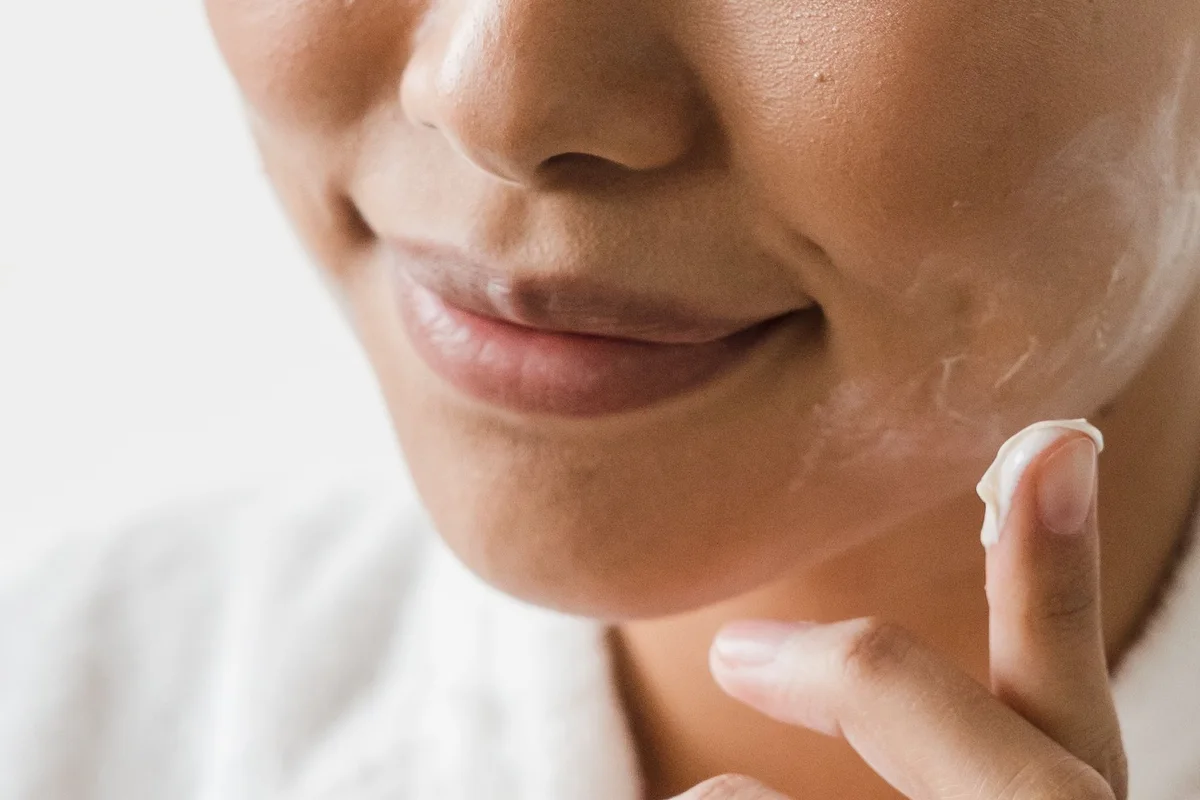
According to a 2023 plastic surgery review of RF microneedling, the treated area is cleansed and a topical anesthetic, commonly a gel, is applied and then removed before treatment begins.
The same review lists nerve blocks, superficial skin blocks and tumescent anesthesia among additional methods to reduce pain during the procedure. Cleveland Clinic's guide to microneedling without radiofrequency describes a numbing cream applied about 30 to 45 minutes beforehand so that it has time to work.
Redness, swelling, pinpoint bleeding and grid marks in RF microneedling downtime
Downtime after RF microneedling is mostly the time it takes for visible reactions to fade. A 2026 complications review and a 2023 plastic surgery review list redness, swelling, pinpoint bleeding, crusting, peeling, small bumps where the needles entered and, after higher-energy treatment, grid-like marks.
| Reaction after RF microneedling | Timing given in the source |
|---|---|
| Redness and swelling | Right after treatment; usually peak within 24 to 48 hours and fade within 3 to 7 days |
| Pinpoint bleeding, mild crusting, dry skin, peeling | Temporary; duration and severity vary with the person and the settings |
| Small bumps where the needles entered | Common in the first 24 to 48 hours |
| Grid-like marks after higher-energy treatment | Usually last 1 to 2 weeks |
The timings for redness, swelling, pinpoint bleeding, crusting, dry skin and peeling come from the 2026 complications review, and those for small bumps and grid-like marks come from the 2023 plastic surgery review.
The physics review explains that the needles pierce the epidermis, the outer layer, without heating it, and that the piercing causes superficial micro-bleeding. The 2023 review notes that pinpoint bleeding is often used as the desired endpoint of treatment, and that bruising can occur if treatment continues beyond it, especially in sensitive areas or around the eyes.
The 2026 review states that the severity of redness and swelling depends on the energy settings and how deep the needles penetrate. For pinpoint bleeding, crusting, dry skin and peeling, it notes that both duration and severity can vary between individuals and with the treatment settings. For microneedling without radiofrequency, the Cleveland Clinic guide advises contacting a healthcare provider if the treated area stays swollen for longer than a week.
Sources
Frequently asked questions
Can you look up which RF microneedling treatment has the least pain and downtime?
A 2026 review of RF microneedling complications does not identify one treatment with the least pain and downtime. It reports that pain increases with higher energy and deeper needle penetration, and that the usual redness and swelling peak within 24 to 48 hours and fade within 3 to 7 days. The review adds that device type, operator experience, skin type and treatment settings all change these reactions, and that published studies do not account for those factors in the same way. In RF microneedling, fine needles act as electrodes. They enter the skin and release short pulses of radiofrequency energy at a chosen depth in the dermis, where resistance in the tissue converts the energy to heat. Needle design also differs between devices. Insulated needles release the energy only at their tips, while the whole length of a non-insulated needle acts as the electrode, so it is reasonable to confirm which type a device uses before RF microneedling.
How painful is RF microneedling?
A 2026 complications review calls pain during and right after treatment a common complaint and reports that the pain increases with higher energy and deeper needle penetration. A 2023 plastic surgery review describes the pain as "relatively mild and short lived" and attributes it to the needling mechanism. Cleveland Clinic's guide to microneedling without radiofrequency notes that some people feel discomfort when the needles are near bony areas, such as the cheekbones.
How long does redness last after RF microneedling?
A 2026 complications review reports that redness and swelling after RF microneedling usually peak within 24 to 48 hours and fade within 3 to 7 days. The same review lists prolonged redness and grid-like redness among uncommon effects.
Is numbing cream used for RF microneedling?
Yes. A 2023 plastic surgery review of RF microneedling describes cleansing the skin, applying a topical anesthetic gel and removing it before treatment. Cleveland Clinic's guide to microneedling without radiofrequency describes a numbing cream applied about 30 to 45 minutes beforehand. The 2023 review also lists nerve blocks and tumescent anesthesia among other methods to reduce pain during the procedure.
What can make reactions after RF microneedling last longer?
A 2026 complications review states that the duration and severity of temporary effects such as pinpoint bleeding, crusting and peeling vary with patient factors and treatment settings, and that the severity of redness and swelling depends on the energy settings and how deep the needles penetrate. A 2023 plastic surgery review reports that grid-like marks after higher-energy treatment usually last 1 to 2 weeks, and that bruising can occur if treatment continues after pinpoint bleeding appears, especially around the eyes.
This content is for general information only and does not guarantee the results of any treatment. Any treatment decision should be made in consultation with a qualified medical professional.